
Advancing Behavioral Health Together
Greetings from Department Chair Dr. Moira Rynn

Thanks for checking out our 2025 digital annual report—we appreciate your interest and support!
It’s impossible for a few stories and infographics to capture the many ways our passionate, dedicated, and talented faculty, staff, and trainees are advancing behavioral health across our missions and throughout the Triangle community, our state, and beyond. This report highlights just a sampling of some of our most impactful work over the past year.
Through the stories, you’ll get a glimpse of our innovative and compassionate patient care, the creative ways our education leaders and trainees are making a difference, and our pursuit of visionary research—all with the goal of improving the health and emotional well-being of those we serve.
I hope you’ll stay in touch by browsing our website, following us on social media, and reaching out to us anytime.
Moira Rynn, MD
Department chair
J.P. Gibbons Distinguished Professor of Psychiatry & Behavioral Sciences

Clinical Highlights
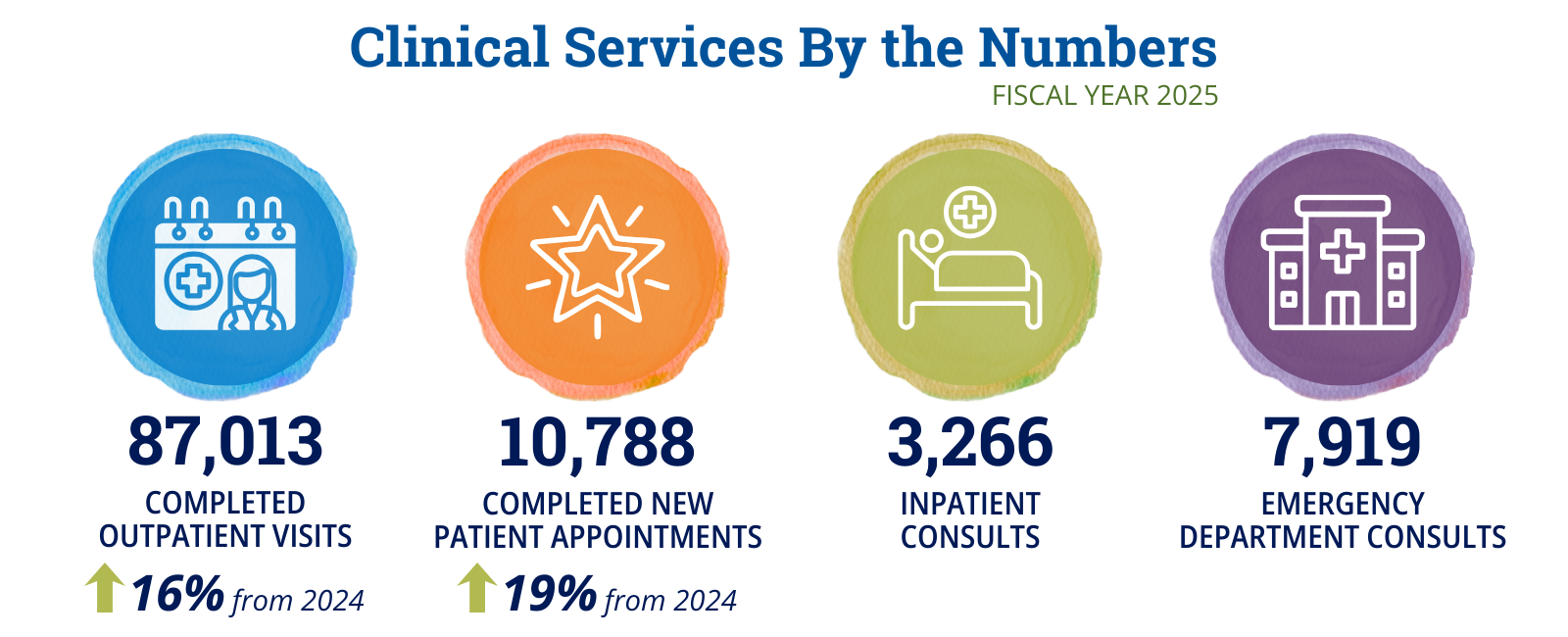
Duke Psychiatry & Behavioral Sciences offers a range of evidence-based, patient-centered outpatient and inpatient clinical services to meet the behavioral health care needs of patients and their families. Faculty and staff provide a variety of assessment and treatment services, including psychiatric consultation, medication therapies, and individual, family and group psychotherapy.


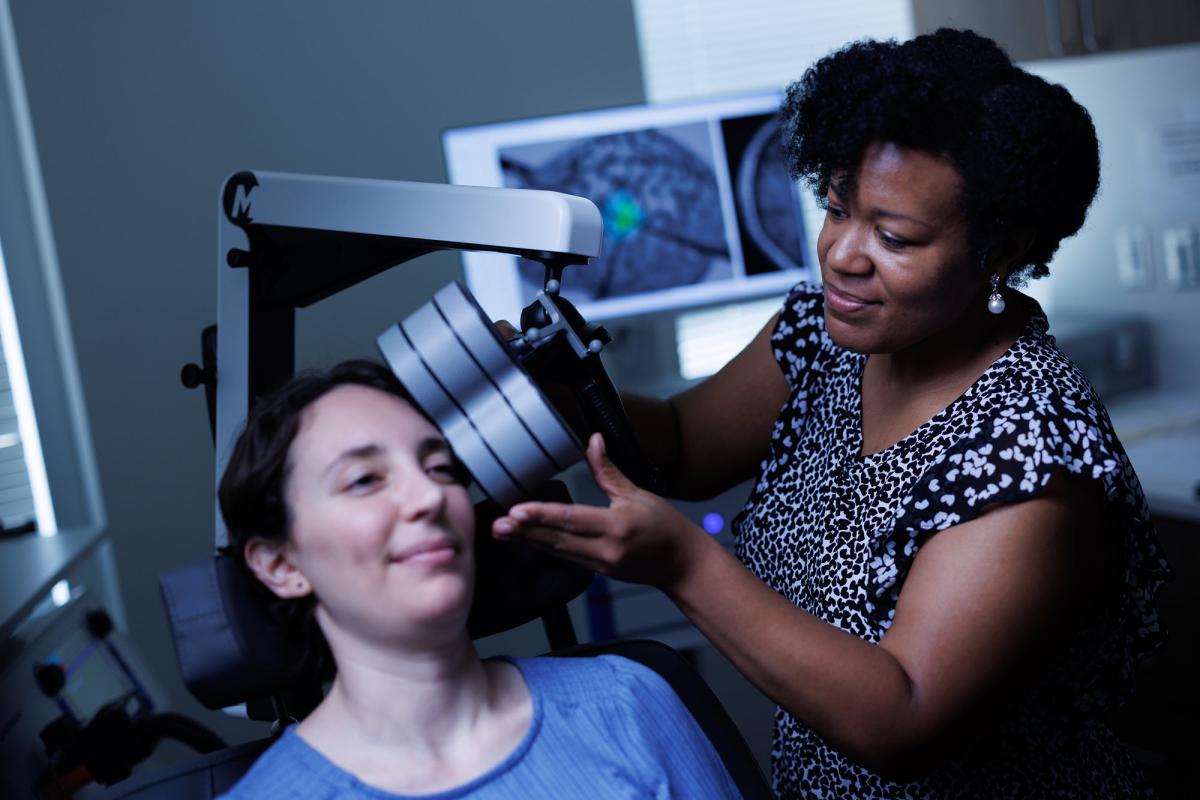
“Psychiatric illness has such profound effects on quality of life, and we are so grateful to be in the position to provide another treatment option for treatment-resistant conditions that can help patients get back to their lives.”
— Jacob Feigal, MD, TMS clinic medical director

New Specialty Clinic: Duke Mental Health & Wellness
The recently-launched Duke Mental Health & Wellness clinic operates on a self-pay basis, allowing us to offer personalized mental health care without insurance constraints such as prior authorizations and session limits. It's currently staffed by five clinical psychologists. Telehealth and in-person sessions are available.
Learn more about the clinic

Education Highlights
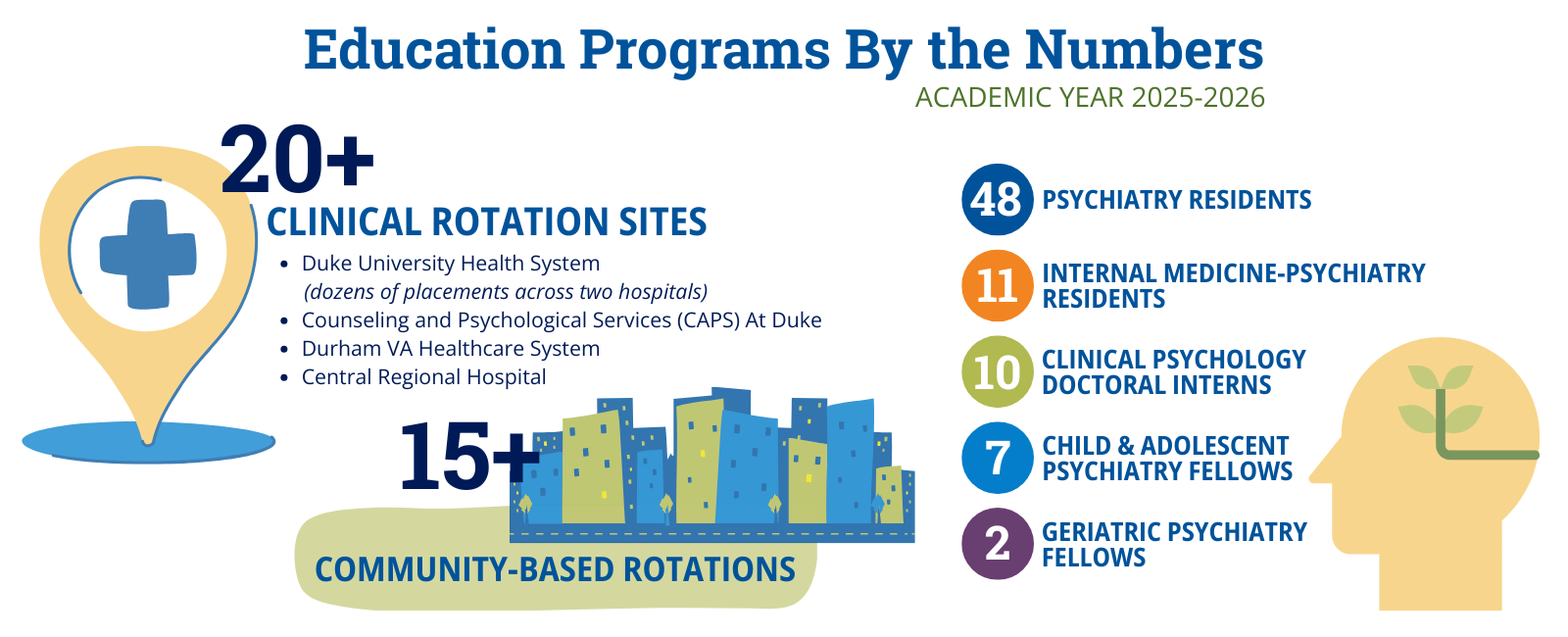
In Duke Psychiatry & Behavioral Sciences, we’re passionate about training future leaders in psychiatry and clinical psychology. Our trainees benefit from a well-rounded cadre of faculty members who are committed to their development, numerous clinics and labs in a world-class medical institution, and a community of fellow learners who share their ambition to improve people’s mental health and quality of life.



“With the critical need for more psychiatrists in the workforce, it’s particularly important to provide as many positive early experiences with psychiatry as possible. And Dr. Jakel’s new approach to the behavioral health curriculum for medical students is such a great example of this.”
— Julie Penzner, MD, vice chair for education

Research Highlights
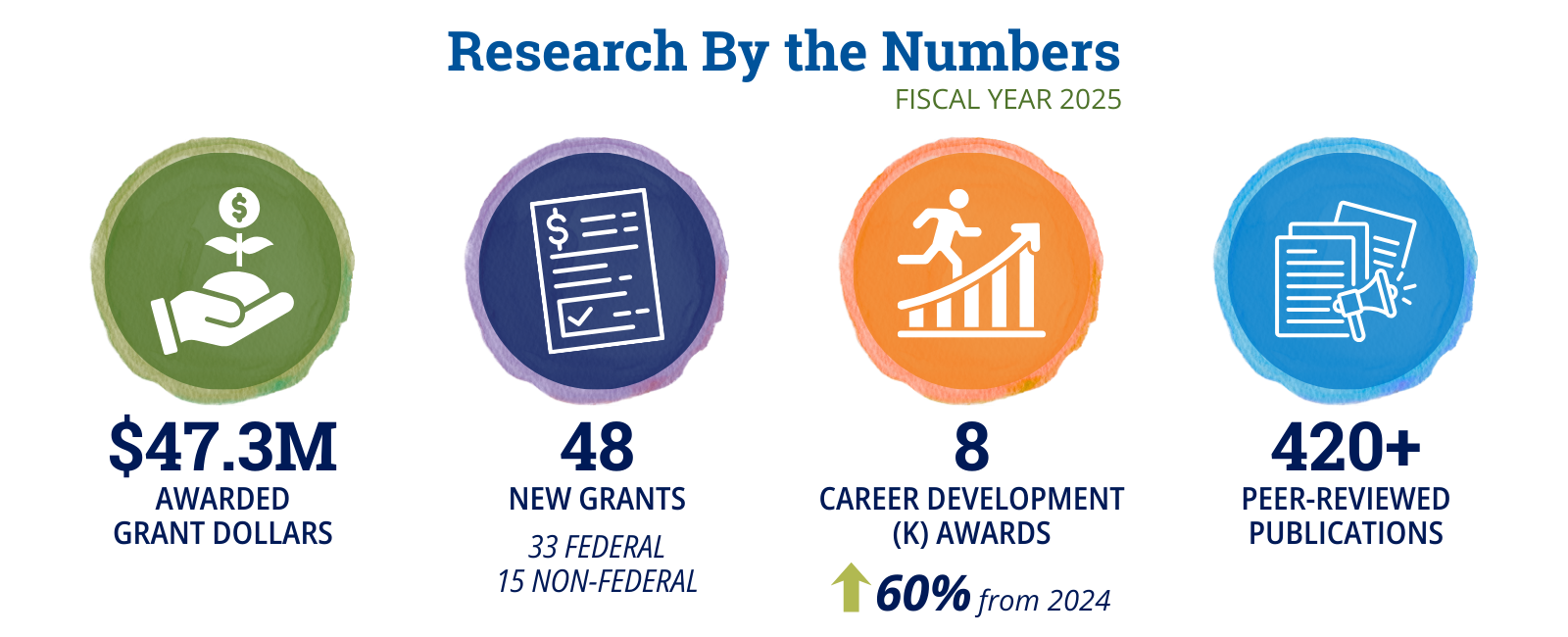
Duke Psychiatry & Behavioral Sciences is an internationally recognized leader in laboratory and clinical research across a spectrum of areas in mental and behavioral health. Our faculty members’ grants from federal and other external sources support a diverse range of work that spans the translational continuum from bench to bedside and beyond.



“Much like how primary care doctors use predictive analytics to determine heart disease risk and intervene before a heart attack, the Duke Predictive Model of Adolescent Mental Health has the potential to give primary care doctors an easy way to identify kids who may need help before serious problems begin.”
— Jonathan Posner, MD, co-PI of grant to expand AI tool to predict teen mental illness

Campus & Community Highlights


“What started out as a conversation has blossomed into a strong multi-year partnership. The Bridge Office is delighted to see the interns grow their clinical research and professional development skills while exploring new career and training opportunities. The support and commitment of the mentors, faculty, and leadership at both institutions is fantastic, and the Bridge Office is so excited to continue our work together.”
— Lisa Davis, PhD, MSPH, director of operations for the Duke-NCCU Bridge Office
Quick Learner Videos on Autism & ADHD
In 2025, Duke University Marketing & Communications collaborated with the Duke Center for Autism and Brain Development and the Duke Center for Girls and Women with ADHD to produce lay-friendly animated videos to shed light on autism and attention-deficit/hyperactivity disorder (ADHD).

Invest in our Future
At Duke University School of Medicine, donors play a vital role in fostering innovation, enhancing patient care, and training the next generation of healthcare leaders. Your contributions not only sustain and elevate existing programs but also pave the way for groundbreaking discoveries.

