

In September 2024, dozens of communities across western North Carolina suffered the wrath of Hurricane Helene; many of these areas are still recovering from the storm’s devastating physical, logistical, and psychological impacts.
Among the most vulnerable groups were children and adolescents with intellectual and developmental disabilities (IDD), whose families often rely on an array of services to meet their complex healthcare needs. In the aftermath of Helene, these services have been harder to access and coordinate, compounding the post-disaster distress experienced by these families.
With funding from the North Carolina Department of Health & Human Services (NCDHHS), a Duke Psychiatry & Behavioral Sciences team is partnering with organizations in western North Carolina to help support these young people and their families.
Facing Unique Challenges
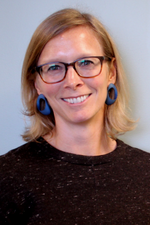
“For things around them to be completely destroyed, that’s more than disrupting a routine for these families. It’s taking away the infrastructure that supports the things they depend on to help them make sense of their day,” said McLean Pollock, PhD, MSW, an associate professor of psychiatry and behavioral sciences who is coordinating the initiative.
She notes that some children with IDD can’t communicate verbally, so they may have trouble expressing their feelings of trauma from the hurricane. Often, their distress shows up as behavior changes or depression. In turn, the child may not receive the support they need because their parents and caregivers may have difficulty seeing or understanding the child’s trauma response.
Many parents and caregivers of these children are also struggling. Because they devote so much of their time and energy to supporting their child with complex healthcare needs, it can be challenging to make space for their own processing and emotional recovery.
A Natural Extension of Current Efforts
When professor Gary Maslow, MD, MPH, and associate professor Nicole Heilbron, PhD, learned in the fall of 2024 that the NCDHHS would fund initiatives to support people with IDD as part of the hurricane recovery, they eagerly pursued the opportunity. An initiative they lead—the North Carolina Psychiatry Access Line, or NC-PAL—was particularly well-positioned to help address the needs of this population in collaboration with local partners.
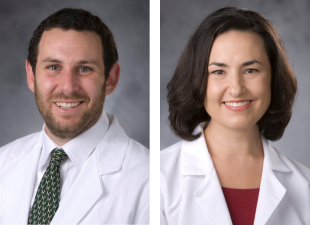
Founded to provide mental health consultation and education to North Carolina clinical and social service providers, NC-PAL has expanded beyond clinical settings to include, among other focus areas, improved support for people with IDD.
“NC-PAL has been working for several years with pediatricians and in schools to support children with developmental disabilities, so it seemed like a natural extension of our existing work in western North Carolina to help these children with special needs,” said Maslow.
In addition to the team’s expertise in IDD and trauma, the relationships and community connections they’ve developed since the initiative’s inception in 2019 are critical to the success of this project.
The team is taking a three-pronged approach: offering training for people who support children impacted by the hurricane, conducting multidisciplinary consultations for children with IDD, and providing coaching and training for parent-to-parent peer supporters.
Responding with CARE
They engaged professor emerita Robin Gurwitch, PhD, and Darden White, MEd, LCMHC, a clinician at the Center for Child and Family Health, to provide Child-Adult Relationship Enhancement (CARE) training for parents, caregivers, school staff, mental health professionals, and others who work with children in western North Carolina.
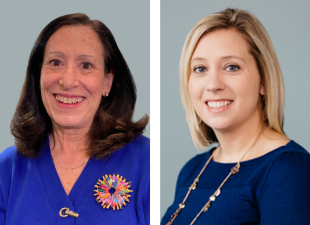
“After disasters, kids often have more behavioral challenges because that's one way children express distress,” said Gurwitch, a renowned expert in supporting children in the aftermath of disasters. “We also see challenges with attention, focus, and following directions. These reactions can impact school performance and home life.”
CARE teaches concepts and skills derived from evidence-based positive parenting programs with the goal of enhancing child-adult relationships. It can reduce mild to moderate behavior problems and complement services for children with more significant challenges.
Gurwitch, a CARE co-developer, adapted the training for use after disasters; the adaptation, “Respond with CARE,” was a perfect fit for the Helene recovery initiative. It’s one of the services offered through NEW DAY (Network for Enhancing Wellness in Disaster Affected Youth), part of the National Child Traumatic Stress Network. Gurwitch co-leads NEW DAY with John Comer, PhD, a psychologist at Florida International University.
The program helps participants understand the impact of disasters on youth; the intersection of grief with the trauma of the hurricane and loss of life; and the importance of caring for their own wellbeing. It also addresses how to build a child’s sense of safety and security—which facilitates stronger connections—and how to improve a child’s ability and willingness to follow directions. The knowledge and skills the half-day training imparts can help reduce youth distress and negative behaviors, ultimately decreasing the need for more intensive interventions or therapy.
The first training, which drew about 30 participants, was held in Burnsville, NC, in October. The team plans to train approximately 100 adults in western North Carolina by the end of June 2026. One of their long-time partners, Mountain Area Health Education Center (MAHEC), is helping them connect with clinical practices, schools, and other organizations to identify potential CARE training participants.
Collaborating to Deliver Whole-Person Care
The NC-PAL team is also working with Vaya Health, a public managed care organization in western North Carolina, to provide in-depth consultations for children, adolescents, and young adults with IDD.
The virtual consults are conducted by a Duke team comprised of a child psychologist, developmental behavioral pediatrician, licensed clinical social worker, and psychiatrist or behavioral health nurse practitioner. The child’s medical specialists, the child, and the child’s parents or guardians also participate.
Rob Macaluso, MA, LCAS, NADD-DSS, a care management leader at Vaya Health, identifies young patients in Vaya Health’s care network who could benefit from this multidisciplinary consultation—usually individuals with IDD and co-occurring medical complexities and behavioral health challenges.
The 2.5-hour assessments typically include five or six medical providers. “We assess the child’s needs, developmental history, medical history, and psychiatric history, and try to get a sense of the child’s previous care and maybe some gaps in their care,” said clinical social worker Mary Beth Hooks, MSW, LCSW.
The Duke team also reviews the child’s medical records and meets separately to discuss recommendations. “There's something magical that happens when the four of us come together with each of our lenses. It’s hard to put it into words,” said Purnima Valdez, MD, a developmental behavioral pediatrician.
“It can be confusing to look at all the information and know what recommendations to prioritize. Our team can look at everything together and help come up with a streamlined plan.”
— Saritha Vermeer, PhD
Child psychologist Saritha Vermeer, PhD, notes that many children with IDD receive care from a variety of clinicians, but often the providers haven’t had opportunities to connect with each other. “It can be confusing to look at all the information and know what recommendations to prioritize,” she acknowledged. “Our team can look at everything together and help come up with a streamlined plan.”
They present their recommendations to Macaluso, who collaborates with other members of the Vaya care team, as well as the families and clinical providers, to implement the suggested next steps. Importantly, the team’s report outlines the reasoning behind their recommendations, which can “increase the capacity of other clinicians who are supporting these families in the community,” said Michelle Franklin, PhD, APRN, a nurse practitioner who leads NC-PAL’s IDD work.
The NC-PAL team has been conducting these complex care consultations for several years, but only recently began collaborating with Vaya Health—a well-suited partner given that 22 of the 32 counties Vaya Health serves were deemed federal disaster areas after Helene. So far, they’ve completed four consults as part of this initiative and anticipate conducting about 20 by June 2026.
“It’s a remarkable opportunity for Vaya Health to be able to present some of our most high-need individuals and to know that the work we do with the NC-PAL team is appreciated and valued by families and providers,” said Macaluso. “Oftentimes, we’ve been doing the right things for the right reasons, and now we just get a little bit of extra guidance in really making that person feel whole.”
“It’s a remarkable opportunity for Vaya Health to be able to present some of our most high-need individuals and to know that the work we do with the NC-PAL team is appreciated and valued by families and providers. Oftentimes, we’ve been doing the right things for the right reasons, and now we just get a little bit of extra guidance in really making that person feel whole.”
— Rob Macaluso, MA, LCAS, NADD-DSS
Thinking about the Future
In 2026, in addition to continuing to host CARE trainings and conduct multidisciplinary consultations, the NC-PAL team will launch the project’s third component: providing coaching and training for parent-to-parent peer supporters. Also known as “family partners,” these peer supporters are parents of children who have had mental health challenges, substance use problems, or IDD; they’ve been trained to help support other families with similar experiences.
Family partners will have opportunities to attend a CARE session, receive training on responses to trauma among youth with IDD, and get three months of health and wellness coaching, all at no cost to them.
The NCDHHS funding currently runs through June 2026, and a two-year grant from Dogwood Health Trust will help sustain the team’s hurricane recovery work.
“This community has a lot of strengths,” Maslow reflected. “We want learn how to work with people in western North Carolina for the long term and figure out how to support the most vulnerable members of their community in a way that’s consistent with their values, so these families and children can have access to what they need to recover from Helene.”
Andrea Diaz-Stransky, MD, a child and adolescent psychiatrist who leads NC-PAL’s outreach efforts, recognizes that the needs will continue to evolve. The team, she says, is prepared to adapt the post-Helene initiative as needed.