

Lynette Staplefoote-Boynton, MD, MPH, is on a mission to better equip primary care and psychiatry trainees at Duke and beyond to counsel their patients on nutrition and food insecurity. This goal inspired her to develop a curriculum on the topic as part of her resident fellowship from the American Psychiatric Association and the Substance Abuse and Mental Health Services Administration.

It's the first section of a broader curriculum on understanding and addressing a range of health-related social needs, which she plans to develop over time.
Malnutrition, or an imbalance in nutritional intake, is one of the leading contributing factors for illness and deaths in the U.S. Poor nutrition—including not getting enough food, eating too much food with little nutritional value, or consuming too many foods high in sodium, saturated fats or added sugars—increases risk for high blood pressure, diabetes, heart disease, stroke, and death. That’s why it’s critical for physicians to know how to spot these problems in their patients and discuss practical strategies to address them that consider the patient’s resources, community, and other aspects of their life.
To develop the training, Staplefoote-Boynton, a fifth-year internal medicine-psychiatry resident at Duke, partnered with two Duke University faculty members, three East Carolina University medical students, and a six-member community advisory board.
The River: A Public Health Metaphor
“We’re trying to communicate to physicians that when it comes to determinants of a person’s health, there are ‘downstream’ factors that affect the patient—such as their diet—that you can potentially address through one-on-one interactions,” said Staplefoote-Boynton. And then there are “upstream” factors—like whether nutritious, affordable food is available in the patient’s immediate community—that impact their ability to stay healthy, she adds.
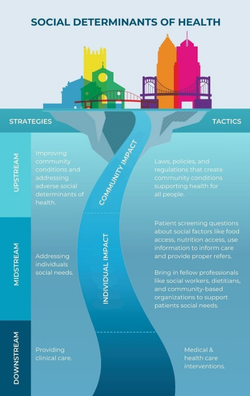
If a physician doesn’t think to ask a patient if they have access to healthy food, counseling on recommended diets may mean little to the patient. The curriculum helps physicians learn how to talk with patients about these topics in ways that are centered around respect and cultural humility.
It also provides general information about community resources to address food insecurity—a lack of access to sufficient nutritious food required for a healthy and active lifestyle. In addition, it gives guidance on collaborating with social workers and other colleagues to help patients access the food they and their families need to thrive.
The curriculum, which will be distributed electronically, includes insights from patient and caregiver advocates, physicians, and community-based professionals; reflection prompts; and resources for trainees to share with their patients or deepen their own knowledge.
“My hope is that primary care or psychiatry residency directors at any institution could use the curriculum to develop slides or facilitate discussions in didactic sessions with trainees,” said Staplefoote-Boynton. She has already piloted the curriculum in Duke’s internal medicine residency, where it was well received by her peers.
Mentorships Blossom throughout the Project
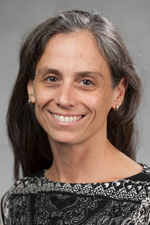
Jane Gagliardi, MD, MHS, a professor in the Department of Psychiatry & Behavioral Sciences and the Department of Medicine, served as Staplefoote-Boynton’s mentor. And from the project’s outset, Staplefoote-Boynton intentionally cultivated a focus on mentoring as she built a team to help bring her vision to fruition.
She and Gagliardi solicited applications from medical students across North Carolina to join the project as research assistants. Three medical students from East Carolina University’s Brody School of Medicine—Julianna Roupas, MD, Ashley Moore, MD, and Benjamin Wise, MD—were selected to review and synthesize relevant literature, among other tasks.
Roupas, now a first-year psychiatry resident at Duke, came to the project with experience addressing food insecurity in several North Carolina communities.
“My job was to think about the significance of food and nutrition insecurity and how they affect individuals’ health, and then look into how they could present in a clinical setting and provide recommendations for physicians on how to identify and address these things,” said Roupas.

Roupas says the project gave her insight into the subtle ways a patient may present with symptoms that can be traced to health-related social needs, such as nutrition, not being met. Another valuable takeaway for Roupas has been the mentorship she’s received from both Staplefoote-Boynton and Gagliardi.
Staplefoote-Boynton counts that as a win for the project. “I wanted to be really thoughtful about how I could contribute to the students’ professional development, and receiving excellent mentorship from Dr. Gagliardi helped me do that,” she reflected. “Her mentorship was a meaningful experience that I got from this fellowship that I wasn’t really counting on in the beginning.”
Partnerships Help Ground Project in Reality
Figuring out how to guide trainees on having thoughtful yet practical conversations with patients during time-constrained clinic appointments was just one of the challenges Staplefoote-Boynton’s community advisory board helped the team address.
Comprised of two physicians, three consumer advocates, and a food security expert, the advisory board played a key role in refining the curriculum. Marvin Swartz, MD, a professor of psychiatry and behavioral sciences who specializes in community psychiatry, helped her conceptualize the advisory board.
The board members, who were compensated for their time and input, reviewed the curriculum and provided feedback over the course of several Zoom meetings.
Input from the advisory board also helped the team understand—and incorporate into the curriculum—the centrality of food to people’s identity, the importance of specificity in giving recommendations, and the value in asking the patient questions to get a more holistic picture of their life.
One advisory board member, Mariah Murrell, EdD, recalled having an opportunity to share resources on the root causes of hunger, culturally meaningful foods, and applying a more trauma-informed approach to serving community members. Murrell uses these resources at the Food Bank of Central and Eastern North Carolina, where she serves as chief community impact officer.
“These materials aligned beautifully with the curriculum and demonstrated the benefits of academicians, food bankers, and ‘neighbors’ coming together to help teach doctors improved ways to serve patients,” she noted.
Johnnie Thomas, a consumer advocate on the advisory board, noted the importance of incorporating community feedback when developing educational materials for healthcare providers. “Too many times, doctors are presented with information that does not have the perspectives of the community that they will be working with,” he said. “This in turn limits their ability to truly connect with their patients and can lead to a missed opportunity to make a more informed diagnosis and treatment plan.”
Launching the Curriculum
Staplefoote-Boynton is currently putting the final touches on this section of the curriculum, with plans to further pilot it with medical trainees in the coming months. And even though the fellowship that funded the project has ended and her residency graduation is around the corner, she intends to continue building out the curriculum to cover other health-related social needs.
“This is a really labor-intensive process, and in order to do it well, it’s going to take a little bit more time,” she reflected.
Meanwhile, Gagliardi couldn’t be happier about Staplefoote-Boynton’s progress and the quality of the project: “It was wonderful to watch her operationalize her talent and passion for community engagement and public health into this really incredible project that has been inclusive of mentorship and outreach at all levels,” she said. “I would say this is a model for the way that Duke can engage with communities for the betterment of health.”
“It was wonderful to watch [Dr. Staplefoote-Boynton] operationalize her talent and passion for community engagement and public health into this really incredible project that has been inclusive of mentorship and outreach at all levels,” she said. “I would say this is a model for the way that Duke can engage with communities for the betterment of health.”
— Jane Gagliardi, MD, MHS