

Seven faculty members who have retired from the Department of Psychiatry & Behavioral Sciences this year have been honored with emeritus/emerita status:
- John Fairbank, PhD
- Michael Hertzberg, MD
- Francis Keefe, PhD
- Andrew Sherwood, PhD
- Christi Ulmer, PhD
- Douglas Williamson, PhD
- Marty Woldorff, PhD
These esteemed members of our faculty have advanced our field in notable ways, and their clinical work, research, and engagement with our education programs have positively impacted many people.
We are incredibly thankful for their service at Duke and wish them all the very best in their next chapter. Below are just a few highlights from their careers.
John A. Fairbank, PhD
Professor of Psychiatry & Behavioral Sciences, Division of Child & Family Mental Health & Community Psychiatry
Professor of Psychology & Neuroscience
Retiring in June 2026 after 28 years of service

John A. Fairbank, PhD, a clinical psychologist and tenured professor, has focused his research on traumatic stress, posttraumatic stress disorder (PTSD), and psychiatric epidemiology, particularly among children, military personnel, veterans, and families. His interests also include implementation science research and mental health services research.
Fairbank has held major leadership roles, including director of the Veterans Affairs Mid-Atlantic Mental Illness Research, Education and Clinical Center (MIRECC) from 2008 to 2022 and co-director (2001 to 2021) and senior advisor (2021 to 2026) of the UCLA-Duke National Center for Child Traumatic Stress (NCCTS). He also served as treasurer, vice president, and president of the International Society for Traumatic Stress Studies and chaired multiple national advisory and policy committees.
He has co-authored more than 200 peer-reviewed publications, several books, and nearly 40 book chapters, and he has contributed to landmark studies such as the National Vietnam Veterans Readjustment Study and the Millennium Cohort Family Study. His research has significantly shaped PTSD diagnosis, treatment guidelines, and trauma-informed care systems.
Michael Hertzberg, MD
Professor of Psychiatry & Behavioral Sciences, Division of Adult Psychiatry & Psychology
Retiring in June 2026 after 33 years of service
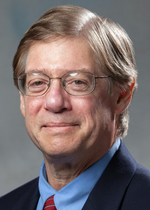
Michael Hertzberg, MD, is a psychiatrist with more than three decades of clinical, research, and academic experience focused on posttraumatic stress disorder (PTSD) and veteran mental health. He has held long-standing leadership roles at the Durham Veterans Affairs Health Care System, including director of the Specialized Outpatient PTSD Program from 1992 to 2021 and medical director of the Trauma Recovery Program from 2021 to 2024.
Hertzberg’s research has centered on the psychopharmacologic treatment of PTSD, with significant contributions to clinical trials evaluating antidepressants, mood stabilizers, and novel therapeutic approaches, as well as studies examining comorbidities such as substance use, pain, and suicidal ideation in veterans. He has co-authored numerous peer-reviewed publications and participated in major VA cooperative studies advancing evidence-based care for trauma-related conditions.
In addition to his research, Hertzberg has participated in national workgroups and has been an active mentor and teacher to medical students and residents.
Francis Keefe, PhD
Professor in Psychiatry & Behavioral Sciences, Division of Behavioral Medicine & Neurosciences
Director of the Duke Pain Prevention & Treatment Research Program
Also holds faculty appointments in Psychology & Neuroscience, Anesthesiology, and Medicine
Retiring in June 2026 after 42 years of service
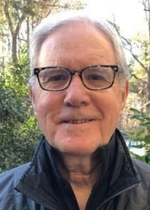
Francis “Frank” Keefe, PhD, is a tenured professor and expert in behavioral medicine and pain research, specializing in the psychosocial and cognitive-behavioral aspects of chronic pain management.
Keefe directed Duke’s Pain Management Program from 1984 to 1998. Since 2000, he has led the Duke Pain Prevention and Treatment Research Program, an NIH-funded program to develop more effective assessments and treatments for acute and persistent pain.
Keefe has conducted numerous randomized clinical trials testing the efficacy of behavioral interventions. He has co-authored more than 550 peer-reviewed publications that have significantly advanced understanding of pain coping strategies, patient behavior, and the integration of psychological approaches into medical treatment.
Throughout his career, Keefe has been a dedicated mentor to many students and early career professionals. He was editor-in-chief of Pain from 2013 to 2022 and served on the Institute of Medicine committee whose 2011 report has informed national policies in pain research and care. In 2024, Keefe received the American Psychological Association’s Distinguished Scientific Award for the Applications of Psychology.
Andrew Sherwood, PhD
Professor in Psychiatry & Behavioral Sciences, Division of Behavioral Medicine & Neurosciences
Professor in Psychology & Neuroscience
Retiring in June 2026 after 32 years of service
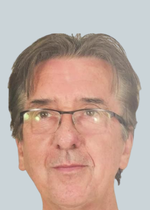
Andrew Sherwood, PhD, is an internationally recognized leader in behavioral medicine and psychophysiology whose research focuses on the biological, behavioral, and sociocultural factors involved in the etiology, progression, and management of hypertension, coronary artery disease, and congestive heart failure. He’s particularly interested in the roles of stress, depression, sedentary lifestyles, and inadequate sleep as risk factors for the development of cardiovascular diseases. He has co-authored more than 280 peer-reviewed publications and a dozen book chapters.
Sherwood has been a principal or co-investigator on numerous NIH-funded studies and landmark clinical trials that have demonstrated the effectiveness of lifestyle interventions such as exercise, diet, stress management, and cognitive-behavioral therapies in improving cardiovascular and mental health outcomes.
In addition to his research, Sherwood has held leadership roles as an NIH reviewer, as well as editorial board member and consulting reviewer on several national and international journals. He has also mentored and taught dozens of students, postdoctoral trainees, visiting international scholars, and junior faculty members.
Christi Ulmer, PhD, DBSM
Associate Professor of Psychiatry & Behavioral Sciences, Division of Behavioral Medicine & Neurosciences
Retiring in June 2026 after 16 years of service
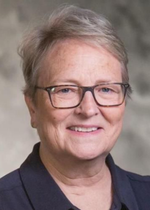
Christi Ulmer, PhD, DBSM, is an associate professor in the Department of Psychiatry & Behavioral Sciences and a clinical research psychologist at the Durham Veterans Affairs Center of Innovation to Accelerate Discovery and Practice Transformation (ADAPT).
Her research focuses on increasing understanding of the health correlates of sleep disorders, increasing patient access to behavioral sleep medicine, and developing and disseminating behaviorally-based treatments for sleep disorders. She has also been treating patients with sleep disturbances for nearly two decades.
Ulmer has co-authored more than 50 peer-reviewed publications and numerous federally funded studies, primarily through the Department of Veterans Affairs and NIH, focused on improving sleep interventions for veterans and other high-risk populations.
Ulmer co-chaired the Veterans Affairs (VA)/Department of Defense Clinical Practice Guidelines workgroup for insomnia and sleep apnea. She has also developed widely used digital tools and training programs to expand access to cognitive behavioral therapy for insomnia (CBT-I).
Douglas Williamson, PhD
Professor in Psychiatry & Behavioral Sciences, Division of Behavioral Medicine & Neurosciences
Retiring in June 2026 after 11 years of service
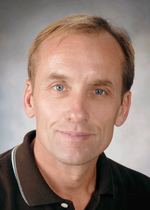
Douglas Williamson, PhD, is a tenured professor in the Department of Psychiatry & Behavioral Sciences and research scientist at the Durham Veterans Affairs Health Care System. His work focuses on the genetic, environmental, and neurobiological determinants of stress-related disorders, including depression, posttraumatic stress disorder (PTSD), and substance use.
Williamson has co-authored nearly 140 peer-reviewed publications. His research integrates multi-level approaches—including genomics, epigenetics, neuroimaging, and biomarker discovery—to advance precision medicine for mental health conditions. He has led and contributed to numerous federally funded studies, including large-scale collaborations focused on PTSD and military populations.
In addition to his research, Williamson has served as an NIH grant reviewer, reviewer for several journals, and an editorial board member for the journals Biology of Mood and Anxiety Disorders and Chronic Stress. He has supervised and mentored dozens of PhD students and postdoctoral fellows.
Marty Woldorff, PhD
Professor in Psychiatry & Behavioral Sciences, Division of Behavioral Medicine & Neurosciences
Professor in Neurobiology
Professor of Psychology & Neuroscience
Retiring in June 2026 after 27 years of service
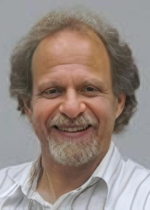
Marty Woldorff, PhD, is a tenured professor and renowned expert in cognitive neuroscience, with a laboratory based in the Duke Center for Cognitive Neuroscience (CCN). He uses advanced electrophysiological and functional neuroimaging methods, along with concomitant behavioral measures, to study the neurocognitive mechanisms underlying attention in humans and how they interact with other cognitive functions, such as perception, conscious awareness, and reward processing.
Woldorff has served as principal investigator or co-investigator of numerous grants from the NIH, the National Science Foundation, the Department of Defense, and various non-federal organizations. He has more than 190 peer-reviewed publications and 31,000 citations, and he co-authored the widely used textbook Principles of Cognitive Neuroscience with his CCN colleagues.
Woldorff has served as associate director and acting director of the CCN, and he was co-founder and inaugural director of the highly successful Duke graduate program in cognitive neuroscience. He also has taught a number of graduate and undergraduate courses at Duke. He has mentored numerous undergraduates, graduate students, and postdocs, many of whom have gone on to faculty positions and other impactful scientific roles around the world. In recent years, he has also mentored various junior faculty members.