

Linda Kerandi, MD, a fourth-year psychiatry resident, received this year’s James H. Carter, Sr. Community Service Award, for her work with people experiencing homelessness.
James H. Carter, Sr., MD, was the first Black full professor of psychiatry at Duke University Medical Center. The Carter Clinic, LLC, led by M. Ojinga Harrison, MD—an alumnus of the Duke internal medicine-psychiatry residency program and a close colleague of Carter—established this award in honor of Carter’s commitment to community service.
Carter’s Dedication to Serving the Underserved
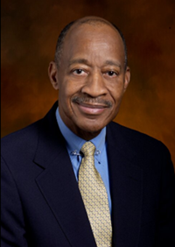
Carter dedicated his career to serving people with limited access to healthcare. In addition to his faculty position at Duke, he played a critical role in building mental health services at Lincoln Community Health Center in Durham, the Alcohol Treatment Center in Raleigh, the Johnston County Mental Health Center and the North Carolina Department of Corrections.
Carter provided critically needed clinical and educational services during his career and inspired and mentored scores of budding mental health professionals. He was recognized for his work at the institutional, local, state and national levels, including receiving the Solomon Carter Fuller Award in 2003. Toward the end of his career, he co-founded the Carter Clinic with his wife, Elsie Carter.
Learn more about Carter’s life and legacy.
Award Recognizes Service in Community Psychiatry
The James H. Carter, Sr. Community Service Award recognizes one or two Duke Psychiatry & Behavioral Sciences trainees each year for outstanding commitment and service in community psychiatry. Award recipients receive a certificate and $1,500 from the Carter Clinic in recognition of their service.
Providing Psychiatric Care & Support for Unhoused People

Kerandi was selected for the award for her work at the Lincoln Healthcare for the Homeless Clinic and her development of a health education series for unhoused people.
Located on the Urban Ministries Shelter campus in Durham, the clinic aims to improve the overall wellbeing of homeless individuals through primary care, psychiatry, substance use counseling, and case management services offered on site and in collaboration with other local service providers.
For the past year and a half, Kerandi has managed the psychiatric care of unhoused and chronically ill individuals with compassion, positivity, and dedication to advocacy.
“Dr. Kerandi truly takes holistic, trauma-informed care of her patients. She considers their physical health, cognition, nutrition, physical safety, and basic needs in addition to her exceptional treatment of their mental health and substance use,” said clinic manager Nicole Helmke, MD, an assistant professor of psychiatry and behavioral sciences and medicine at Duke University School of Medicine. “I have also appreciated her interest in learning about the community services relevant to her patients and her coordination of care with those community partners.”
In nominating her for the award, Helmke also noted the impact of Kerandi’s Duke Psychiatry Residency seed grant project: the development of a health education class focused on social determinants of health for people experiencing homelessness. The classes Kerandi has held so far at the Urban Ministries community café were well received, and she has more sessions planned for the spring.
With the support of a fellowship from the American Psychiatric Association and the Substance Abuse and Mental Health Services Administration (SAMHSA), Kerandi plans to further develop this project to teach junior learners about caring for people experiencing homelessness.
Working at Lincoln Community Health Center has been one of my most impactful experiences in residency. Each week, I am so humbled to be part of a care team for patients facing significant psychosocial stressors. Throughout my time, I have had the opportunity to learn so much from the team at Lincoln, including Mario, Charita, Dr. Helmke, and my fellow residents. However, most importantly, I am constantly learning from my patients. It is truly a privilege to walk alongside them in their mental health journey.
— Linda Kerandi, MD