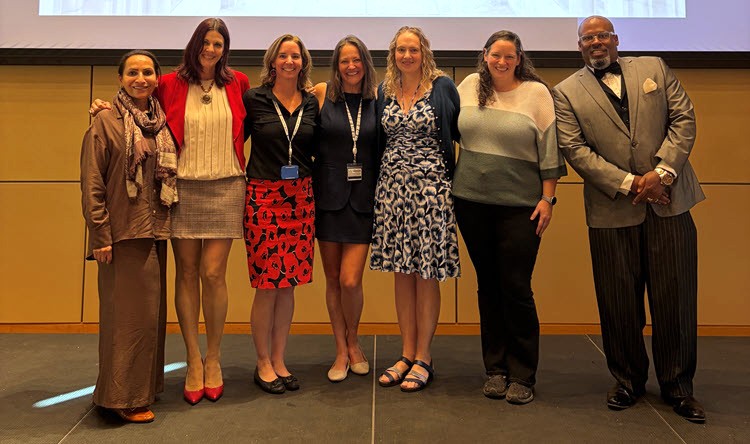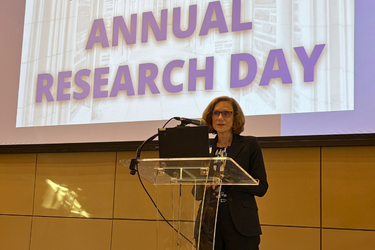
On October 1, more than 130 faculty, staff, and trainees from Duke Psychiatry & Behavioral Sciences gathered for the department’s seventh annual research retreat, hosted by the department’s clinical research unit at Duke University's Karsh Alumni and Visitors Center.
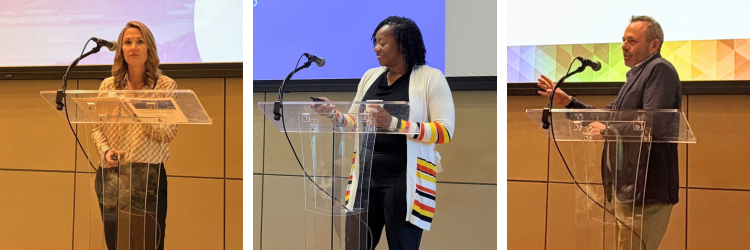
The day began with opening remarks from Moira Rynn, MD, department chair and J. P. Gibbons Distinguished Professor of Psychiatry, followed by a keynote from Michael Kosorok, PhD, W.R. Kenan, Jr. Distinguished Professor of Biostatistics and Professor of Statistics and Operations Research at The University of North Carolina at Chapel Hill (UNC). Kosorok also serves as the director of the Gillings Center for AI and Public Health and director of the Precision Health AI Research Lab, both housed at UNC.
Leveraging AI to Tailor Healthcare
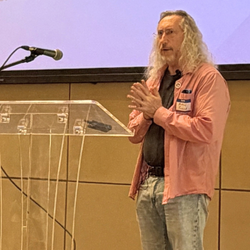
In his presentation, Kosorok highlighted how precision medicine and AI can use patient data to tailor healthcare decisions, with examples spanning pregnancy, chronic pain, youth mental health, and Type 1 diabetes. He emphasized the importance of using these tools thoughtfully to improve treatment, reduce health disparities, and achieve better outcomes for everyone.
Gathering the A Team
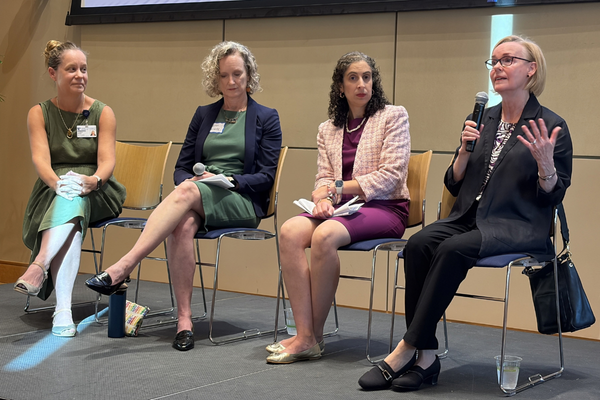
Following Kosorok’s talk was a compelling panel discussion on amplifying scientific impact through interdisciplinary collaborations and centers. Panelists discussed the process for initiating collaborations, considerations for identifying and recruiting the right team members, and other lessons learned from their experience leading successful collaborations.
Moderated by Joseph McClernon, PhD, professor in psychiatry and behavioral sciences, the panel included experts from the Department of Psychiatry & Behavioral Sciences and the Department of Medicine:
- Karen Carmody, PhD, professor of psychiatry and behavioral sciences; co-director, Duke-UCLA National Center for Child Traumatic Stress
- Geraldine Dawson, PhD, William Cleland Distinguished Professor of Psychiatry and Behavioral Sciences; founding director, Duke Center for Autism & Brain Development
- Lauren Franz, MBBCh, MPH, professor of psychiatry and behavioral sciences; director, Duke Center for Autism & Brain Development
- Juliessa Pavon, MD, associate professor of medicine; principal investigator, Duke Artificial Intelligence and Technology Collaboratory for Aging: Governance and Evaluation
Putting What Works into Practice
In the next presentation, Leah Zullig, PhD, MPH, professor in population health sciences, discussed how implementation science helps bridge the gap between what research shows works and what actually happens in everyday health care, by identifying barriers and developing strategies to overcome them. Using posttraumatic stress disorder treatment as an example, she demonstrated that improving care requires not only effective treatments, but also thoughtful approaches to ensure those treatments are adopted, delivered consistently and equitably, and sustained over time.
Closing the Loop with Research Participants
Continuing the theme of intentionally connecting the research with the community, Crystal Tyson, MD, MHS, assistant professor of medicine and medical instructor in psychiatry and behavioral sciences, discussed community-centered research. She emphasized the importance of building trust with study participants and working to ensure the experience is meaningful for them. Her presentation highlighted a strategies for sharing study results with research participants not only at the end of the study, but throughout the research process, as well as other ways to engage research participants as partners.
Engaging with an Important Duke Resource
In the final session, McClernon, who also serves as associate director of the Duke Clinical and Translational Science Institute (CTSI), discussed the differences between translational research and translational science and noted ways behavioral scientists are well suited to conduct translational science. He encouraged audience members — both faculty and staff — to consider and pursue translational science research questions and take advantage of related resources at CTSI.
Sharing Research Findings with Colleagues
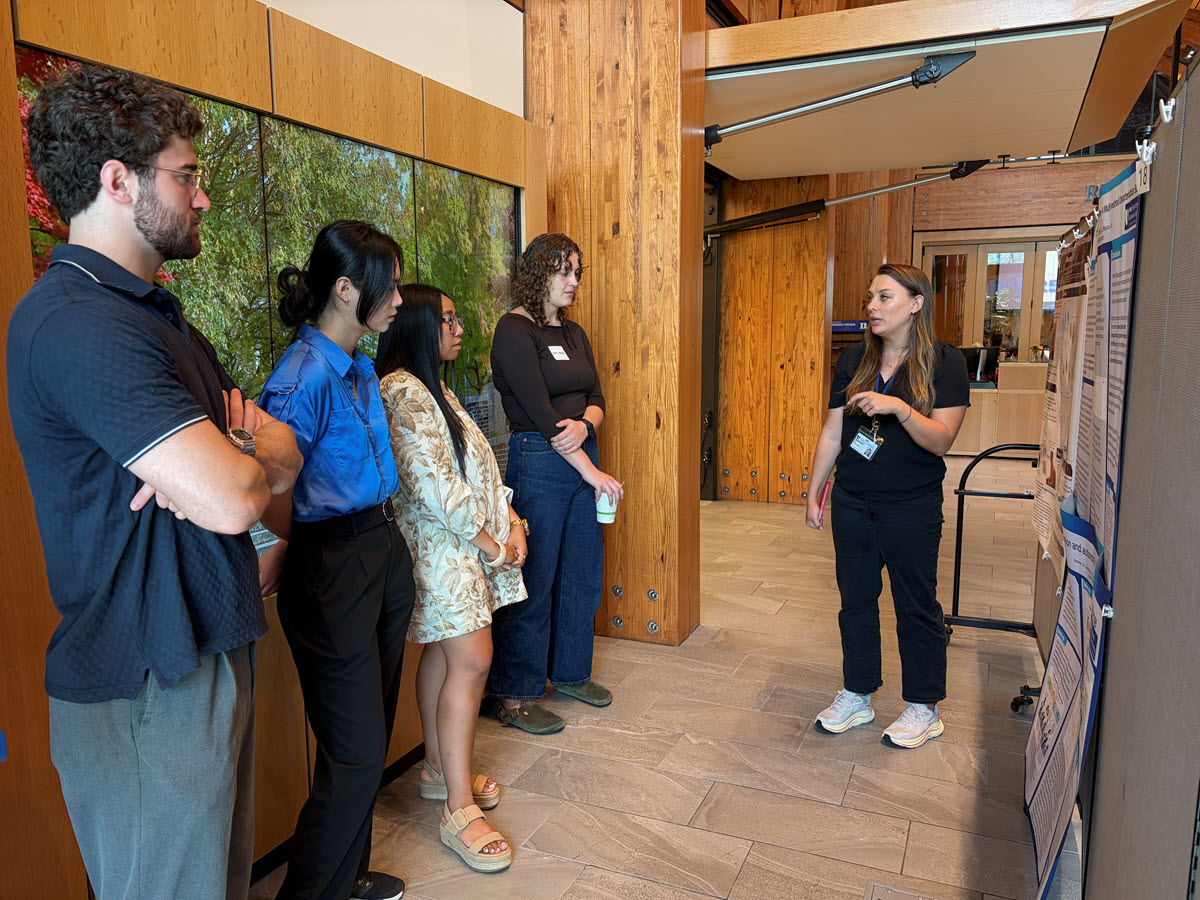
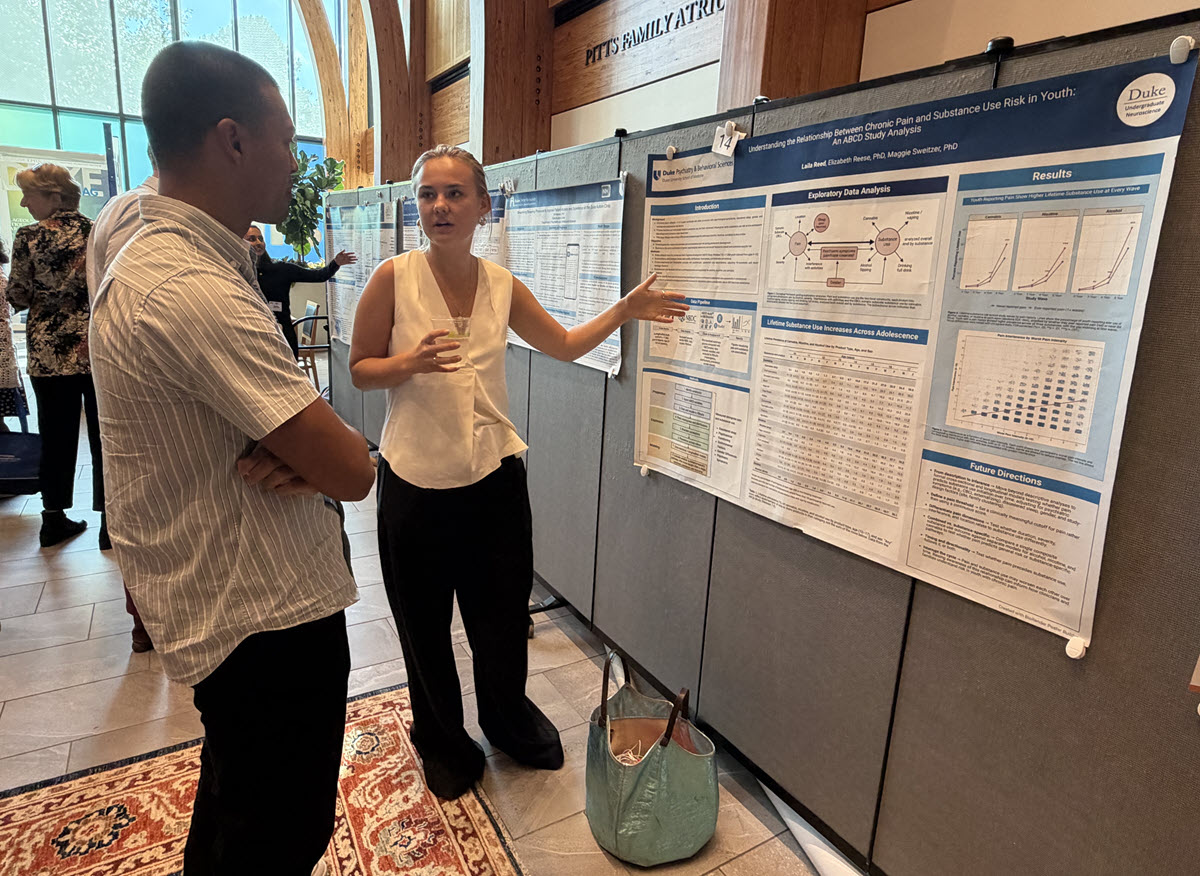
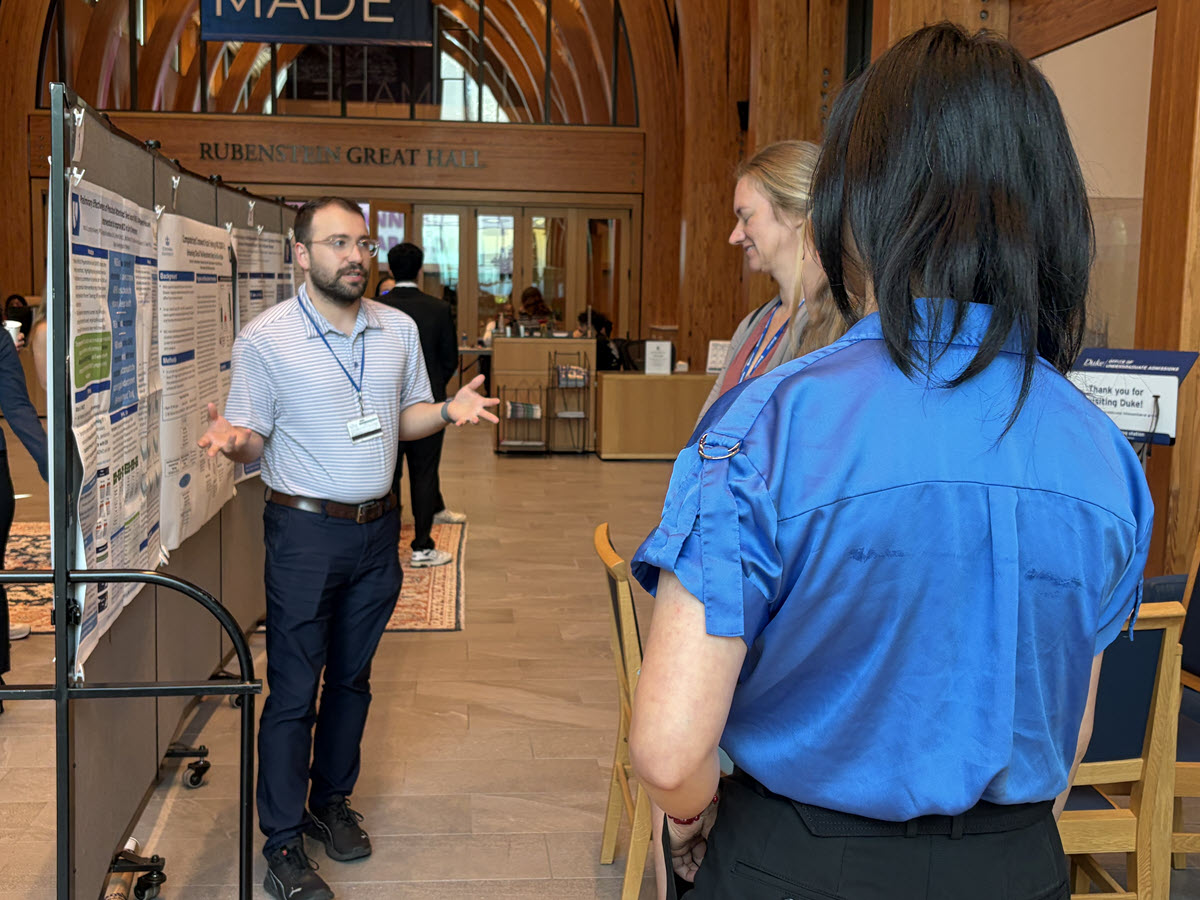
The event concluded with closing remarks and poster awards, followed by a poster session and lunch, offering attendees a chance to network and explore emerging research.
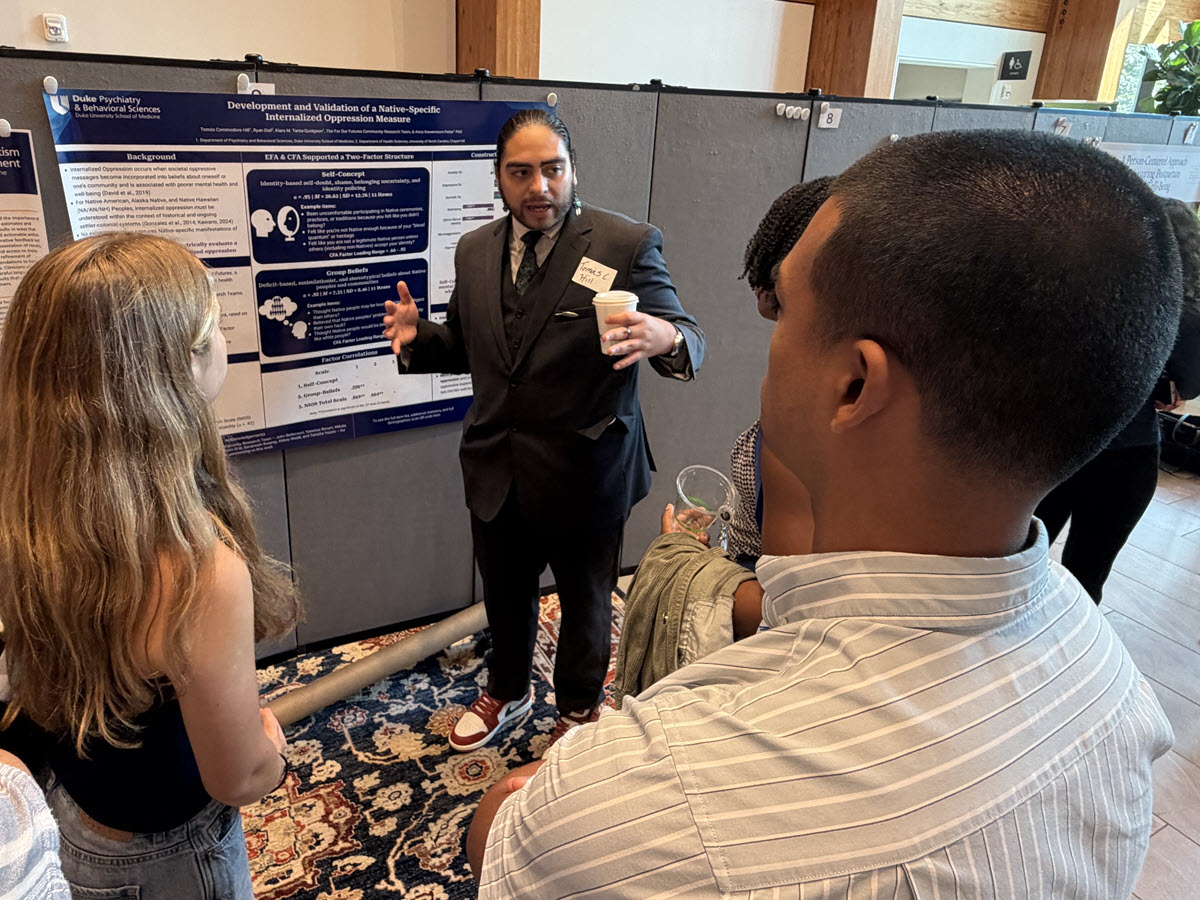
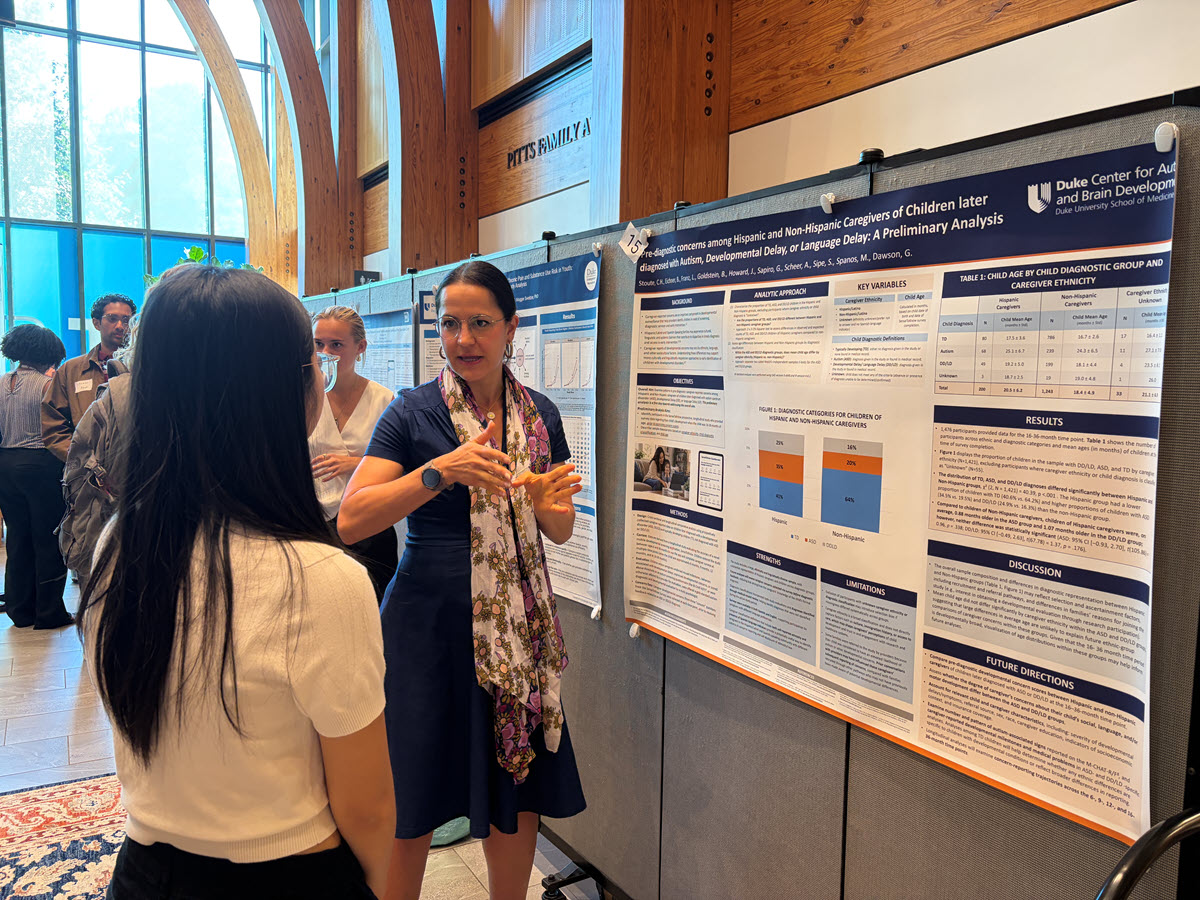
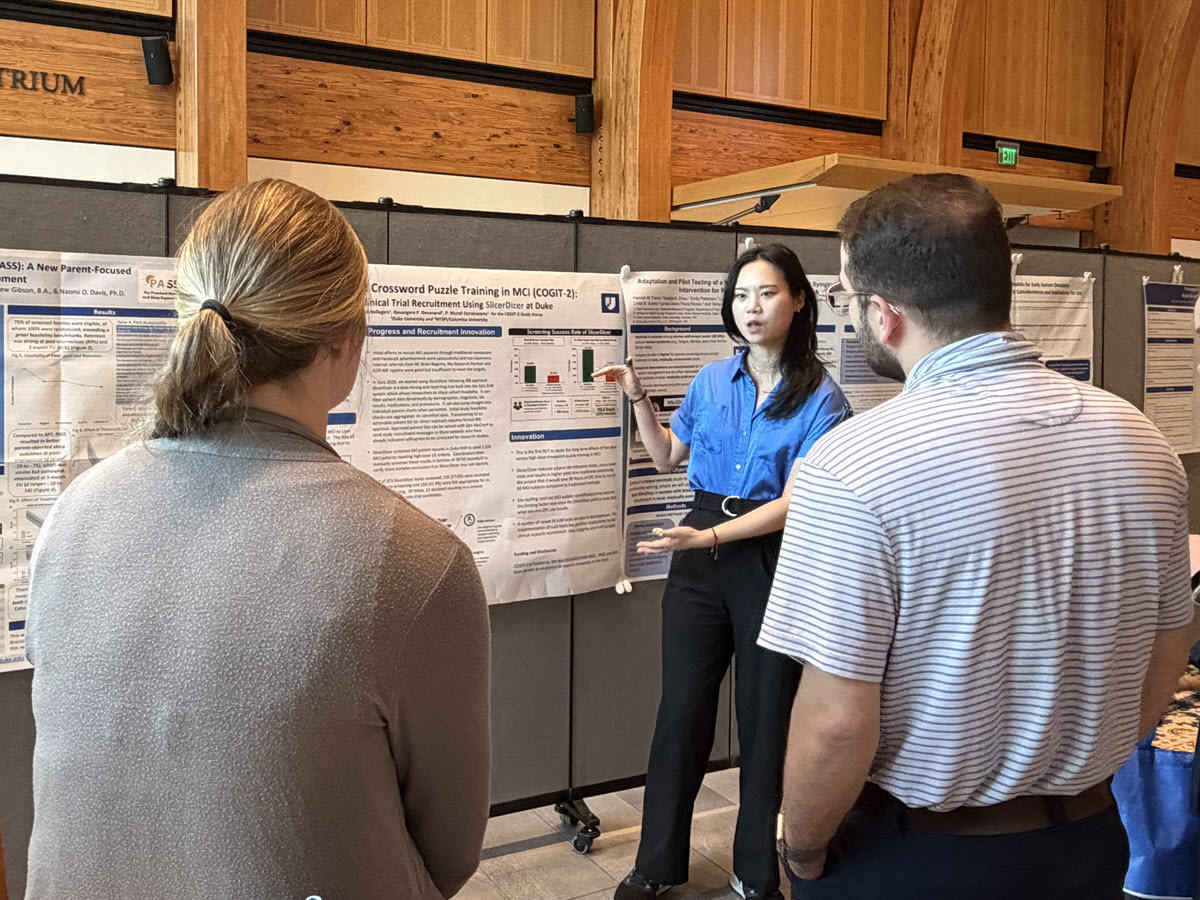
And the Winner Is …
Poster session winners included:
- First place: Milli Patel, “Ambient Air Pollution and Cognitive Flexibility following Trauma: Behavioral and Neuroimaging Findings from a Prospective Cohort”
- Second place: Jessica Lunsford-Avery, PhD, “Preliminary Effectiveness of Preschool Attention and Sleep Support (PASS): A New Parent-Focused Intervention to Improve ADHD in Early Development”
- Third place: Hannah Fisher, PhD, “Adaptation and Pilot Testing of a Mindfulness-Based Insomnia and Symptom Management Intervention for Women with Breast Cancer in Rural Areas”
“Our annual research retreat is a great opportunity for our research teams to step away from day-to-day operations and reflect on the bigger picture of the science they are contributing to. It was great to see this year’s retreat so well-attended, and I thought the sessions came together beautifully.”
— Maggie Sweitzer, PhD, director of the Duke Psychiatry & Behavioral Sciences clinical research unit
We want to give special recognition to the team who organized the event: Windy Batten, CRA; Cameron Howes, CCRP; Rachel Kozink, MS, CCRP; Nabila Lateef; Rachel Orr, CCRP; Tuyen Phan, MBA; Amanda Stemke, MPH, CCRP; Maggie Sweitzer, PhD; and James Thomas, MS.