

On a sweltering day in July, 15 young adults stayed cool as they gathered in a meeting space in Trinity House, a dorm on Duke’s East Campus, to talk about how to best use their often-limited energy. Conversation and camaraderie flowed freely as they explored the role of sleep, body rhythms, personal values and beliefs, and mobile apps in managing their energy throughout the day.
They’d come from across North Carolina’s Triangle region to Campference, an annual four-day summer residential experience—part camp, part conference—for people ages 15 to 22 with chronic health conditions. Some were first timers, while others were eager to reconnect with friends from previous Campferences.
The program is one of several offered by Adolescents Transitioning to Leadership and Success (ATLAS), a Duke Psychiatry & Behavioral Sciences initiative that works with teens and young adults living with chronic health conditions. The ATLAS team aims to help these youth build capacity to cope with their condition and self-advocate as they transition from pediatric to adult medical care and play a larger role in managing their health and wellbeing. This year marks ATLAS’s fifteenth anniversary—and Campference’s tenth.
Learning & Connecting in a Relaxed Setting
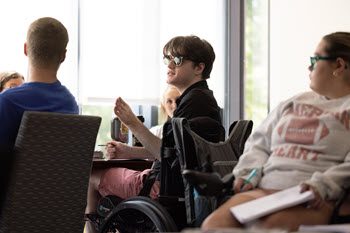
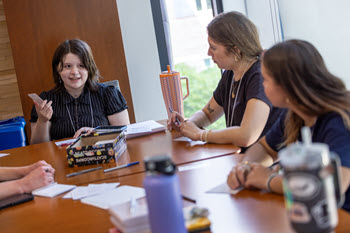
Campference gives these young adults a chance to come together to build leadership and life skills, share their experiences, explore topics related to emerging adulthood, swap tips for managing their conditions, and just have fun. They attend two structured sessions each day and spend the rest of their time socializing, playing games, resting, and eating meals together.
Nathan Faber, a camper from Chapel Hill who has been involved with ATLAS since 2020, especially enjoys connecting with other participants: “It’s pretty isolating unless you know a group of people with conditions similar to you. The only person close to me who has conditions is my own family,” he reflected. “There are several people in Campference with the same condition as mine, so that’s helped a lot with that feeling. There’s a good sense of community.”
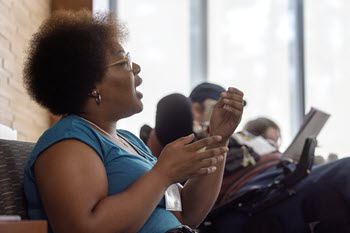
Program coordinator LaKaya Craig, MA, LCMHCA, NCC, plans the experience in collaboration with former Campference participants. “They set the agenda for what it’s going to look like. And that’s just a really core part of making sure that Campference is for them and not for us.” This approach is central to all ATLAS programs, she added: “We really value what they say they need, because that’s what helps keep our programming relevant and what keeps them coming back.”
This year, session topics included protecting one’s energy, living with stigma, practicing self-advocacy, staying active, and learning kitchen hacks for preparing meals. But the most anticipated activity may have been the lip sync battle and karaoke session—a cherished tradition of the last night of Campference.
Camping on Campus
Campference is the first time many of the participants stay overnight away from home, in part because camps typically don’t have the resources needed to support this type of experience for young people with a range of special healthcare needs.
To ensure the wellbeing and safety of the campers, ATLAS enlists the help of a cadre of on-site volunteers, including pediatricians, nurse practitioners, nurses, nursing students, medical students, and medical residents. Preparation begins weeks in advance with staff collecting various medical forms and releases and reviewing participants’ medical history.
The experience of living in a dorm for a few days also serves as a “trial run” for participants who are considering attending college but may be apprehensive. “They’re able to conceptualize, ‘Oh, the rooms can accommodate me; I can have the beds lowered,’ and those sorts of logistics,” said ATLAS program manager Jon Wolseth, PhD. “There’s nothing quite like doing a run-through to help them gain confidence.”
Staying on campus is a draw for Xochi Arredondo, a participant from Raleigh who returned this year for her third Campference. “I like the dorm aspect—maybe not the communal bathroom, though,” she quipped. “And this is the time where I get to see people for multiple days and just catch up.” She also enjoys artistic activities like creating a collage from magazines, which she did at last year’s Campference.
Scenes from Campference 2026
-
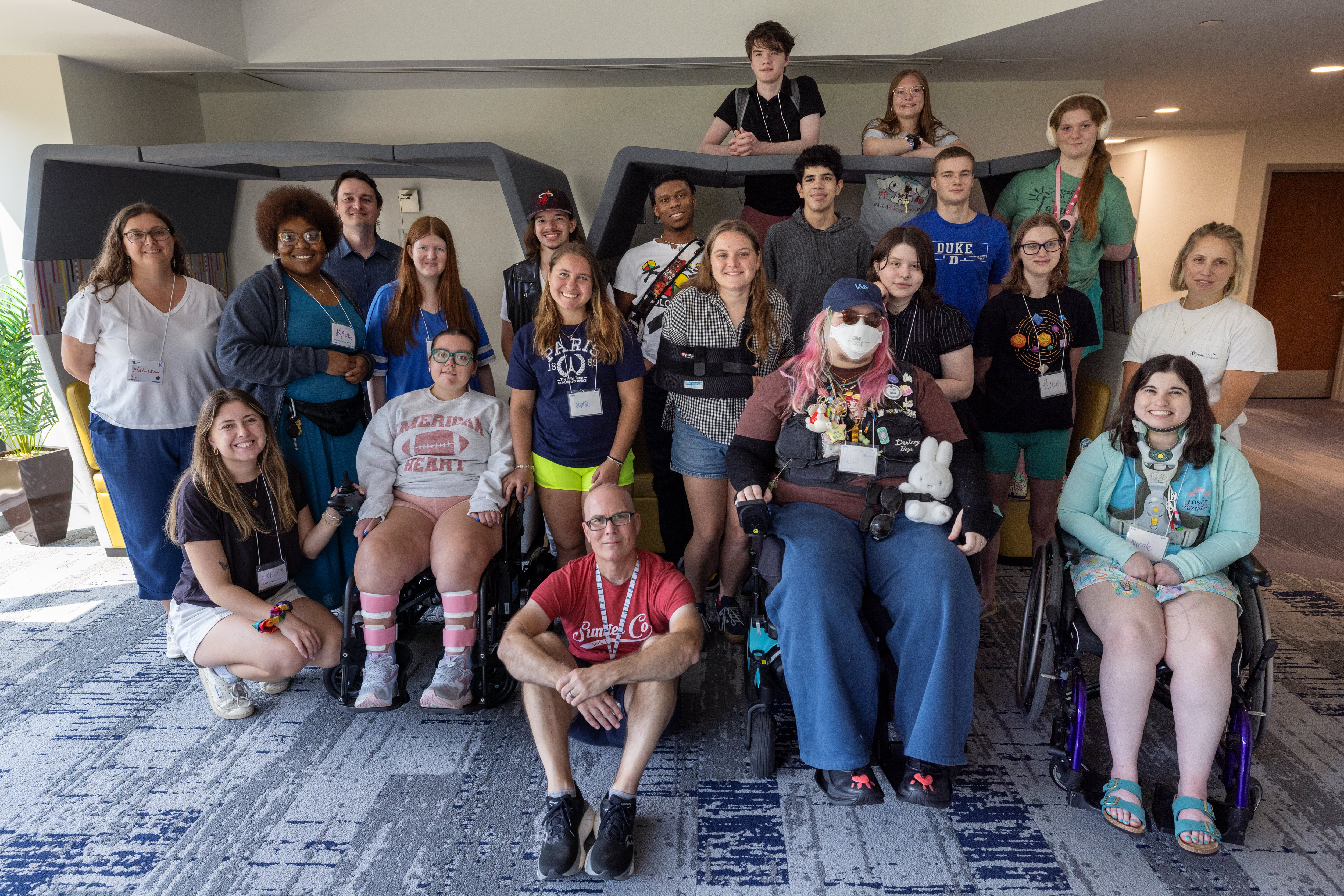 Group photo of Campference 2026 participants, leaders, and volunteers. Photo by Mark Dolejs.
 -
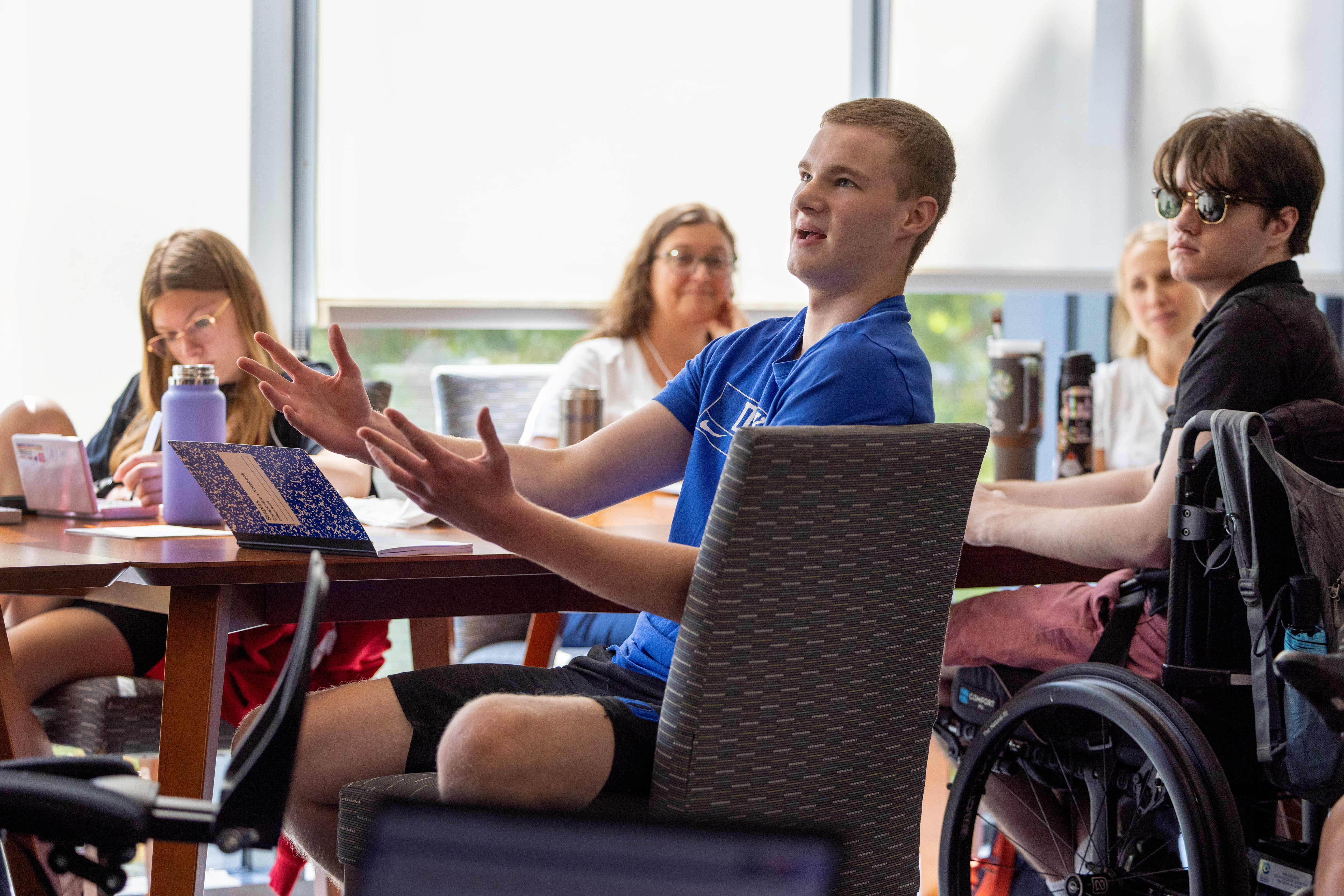 James Walter (center) participates in a discussion during the “Protect Your Energy” session at Campference. Photo by Mark Dolejs.
 -
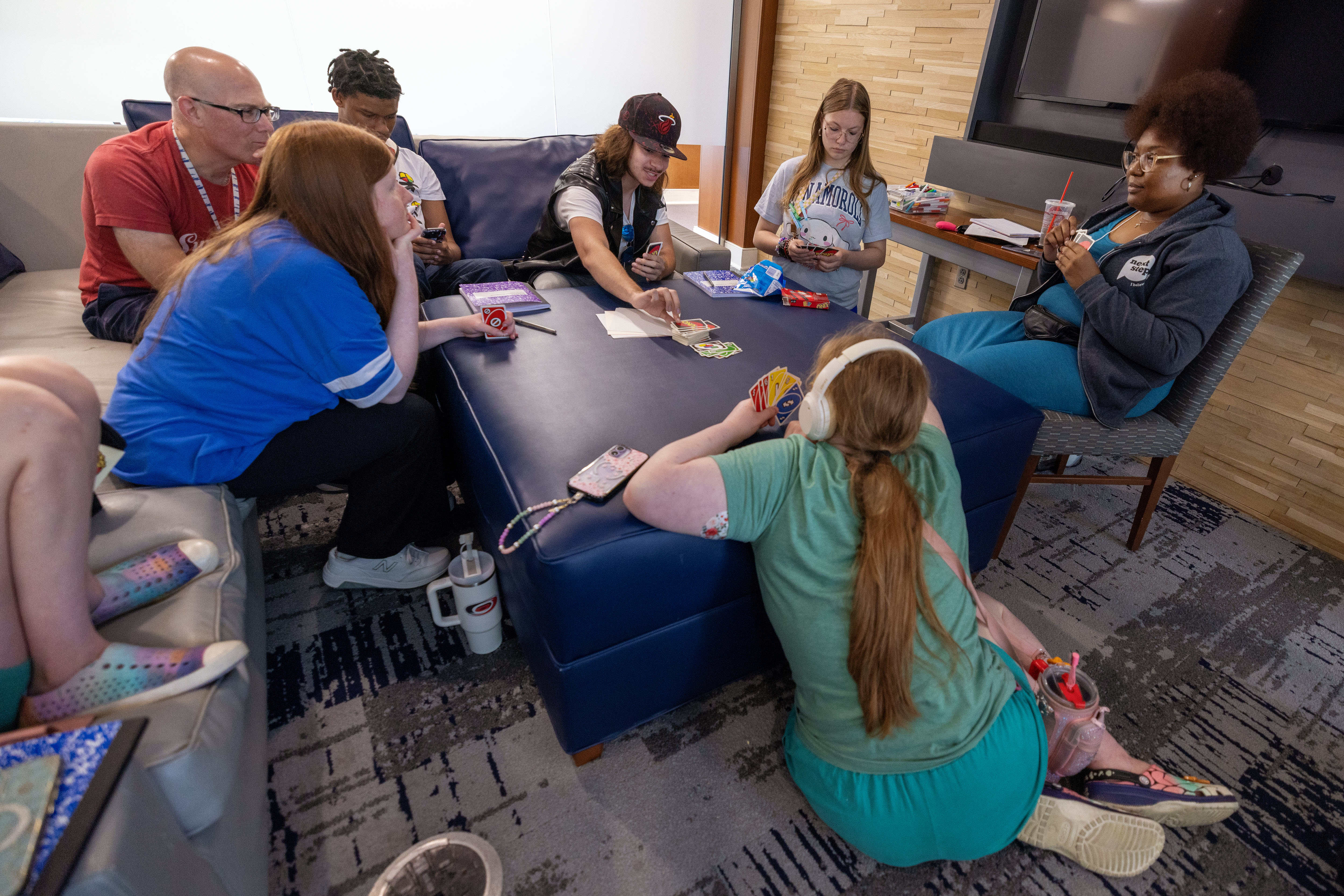 A group of Campference participants play UNO during their free time. Photo by Mark Dolejs.
 -
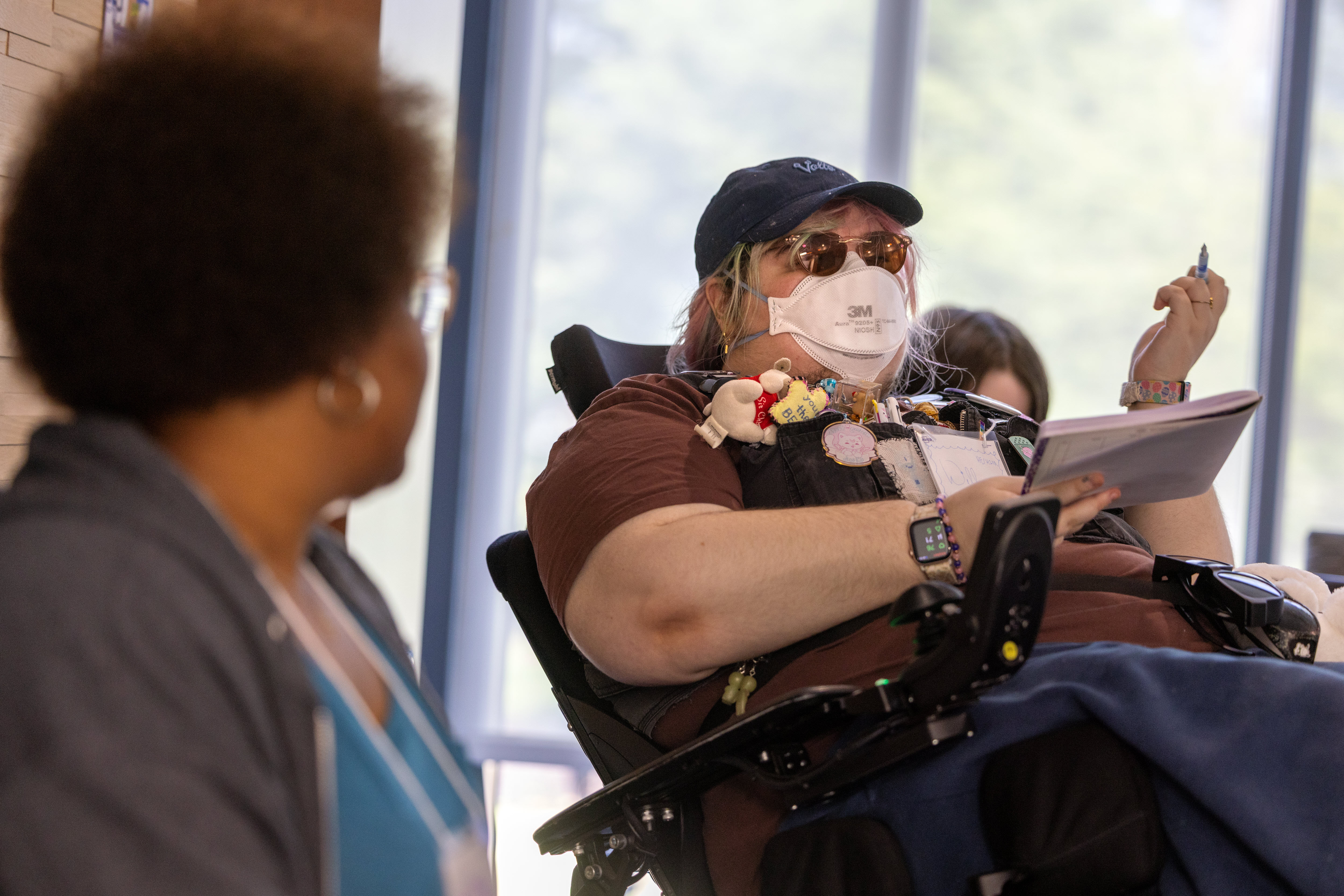 Will Benton shares his experience in a discussion during the “Living in a Stigmatic World” session at Campference. Photo by Mark Dolejs.
 -
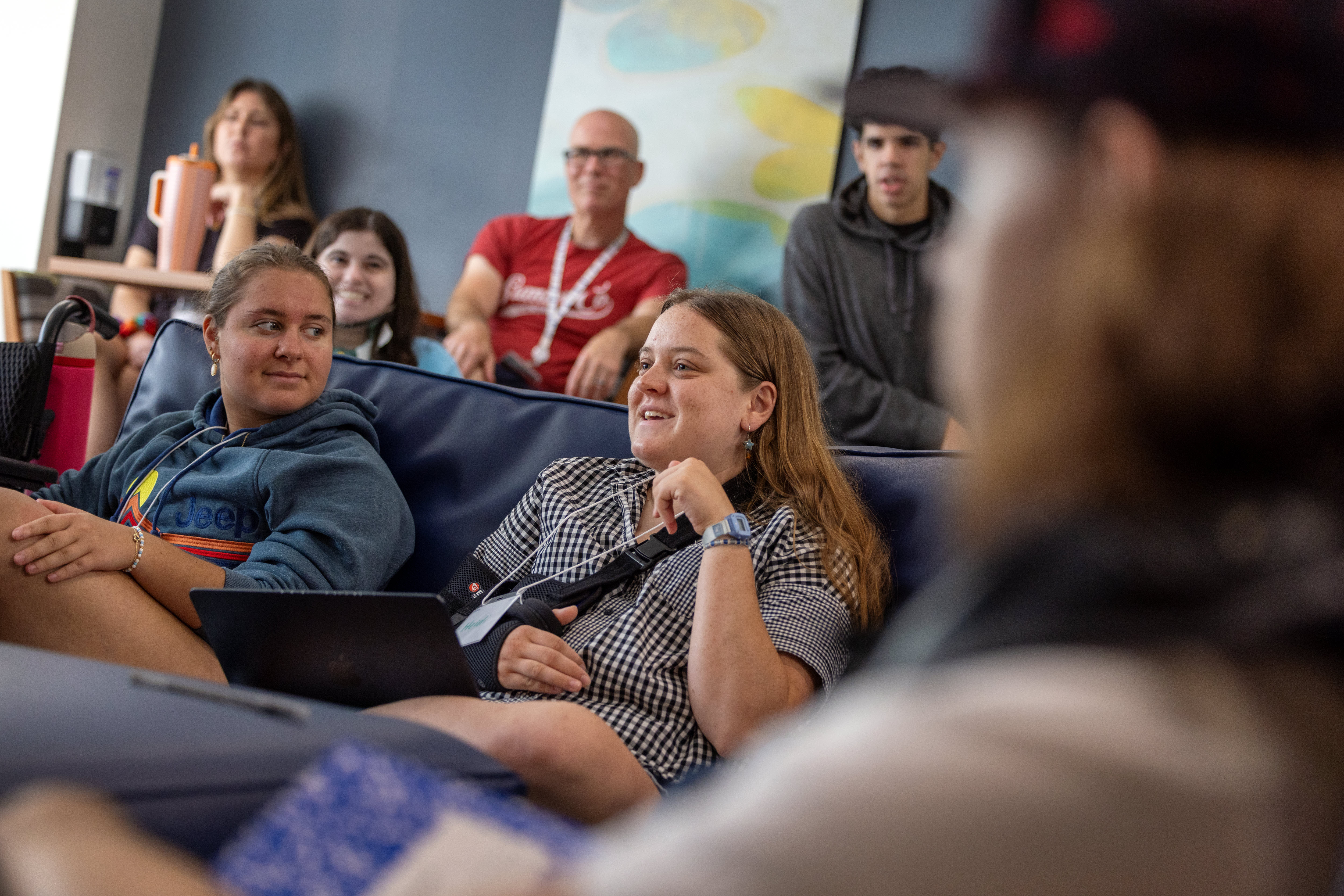 Heidi Dittus (center) participates in a discussion in the “Protect Your Energy” session at Campference. Photo by Mark Dolejs.
 -
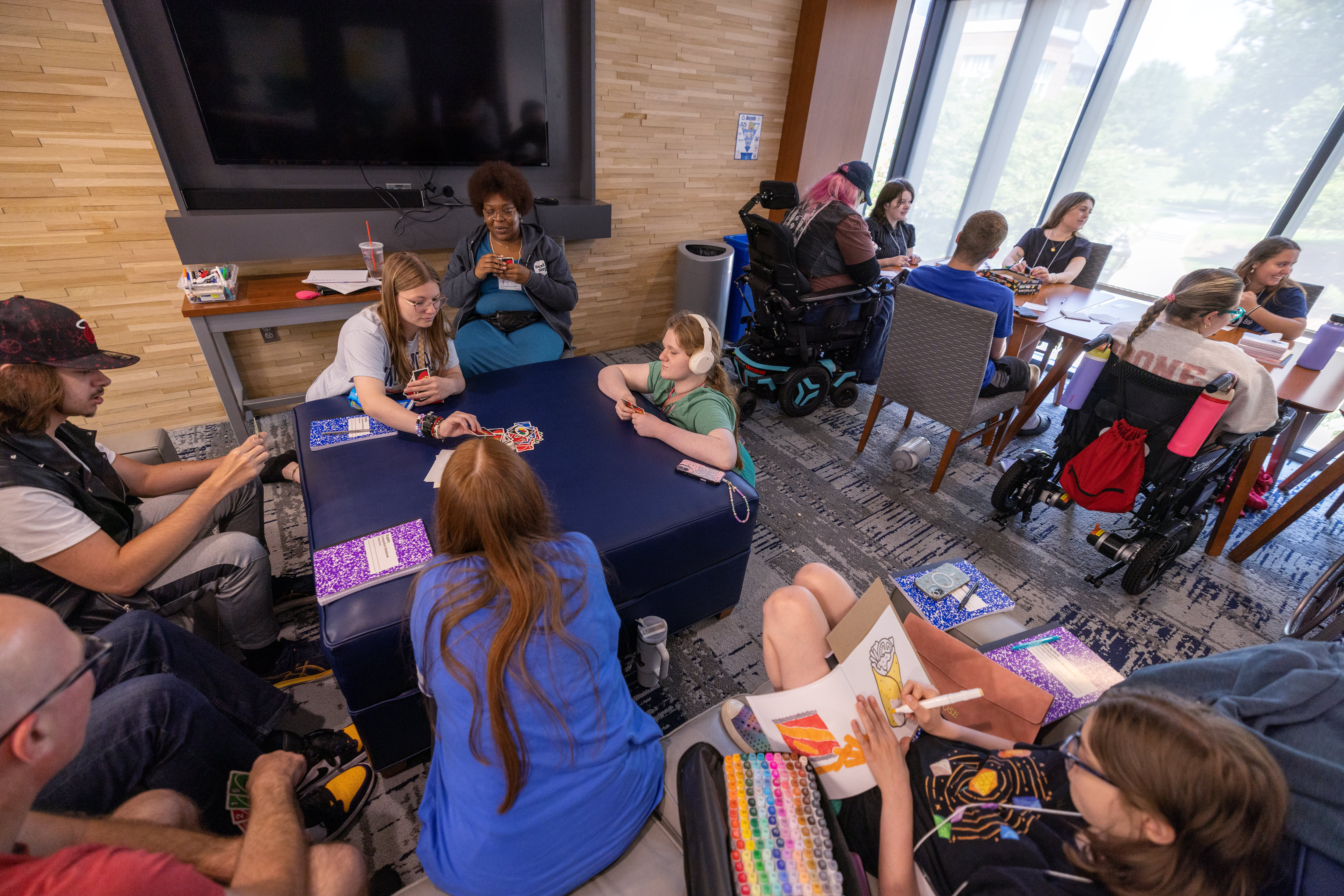 Campference participants play cards, color, and chat during free time. Photo by Mark Dolejs.
 -
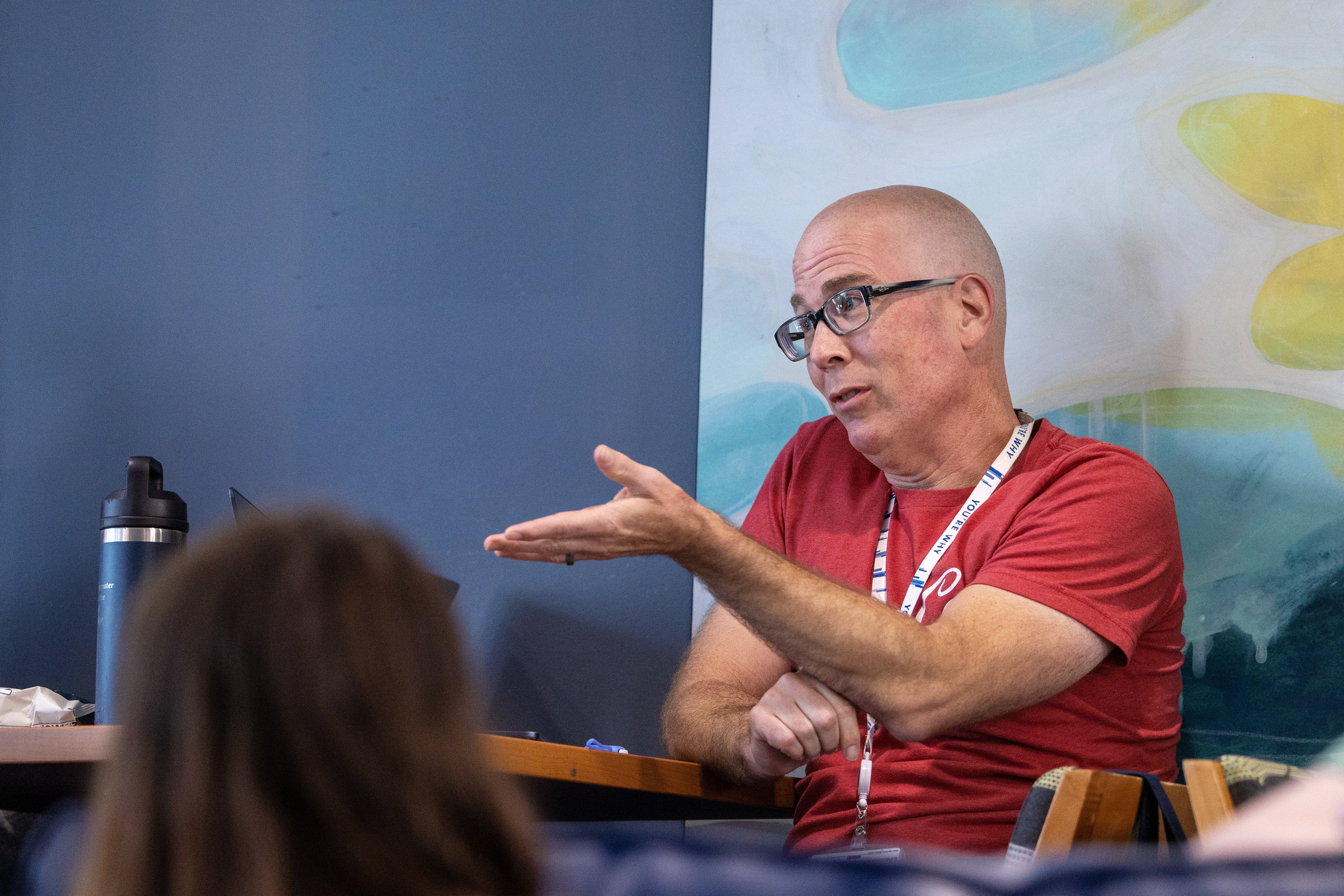 Jon Wolseth, PhD, poses a question in the “Protect Your Energy” session at Campference. Photo by Mark Dolejs.
Varied Support for Young Adults
Beyond Campference, ATLAS’s signature leadership program brings together middle school and high school students and young adult mentors for group mentoring. Mentors are trained in facilitation skills, safety issues, and recognizing signs of mental health struggles. Program staff provide ongoing support to mentors to prepare them for meaningful conversations with their younger counterparts about topics such as communicating with their clinical providers, talking with friends about their illness, and becoming more independent in managing their condition.
Arredondo shared, “[Through the leadership program] I feel like I’ve come into myself more with being able to use aids. For the first two years after I was diagnosed, I held off from using canes or anything like that, but then I slowly got used to the idea, because it is something I need from time to time. You see a bunch of different people with different needs, and so you kind of find it in yourself to recognize your own needs.”
“[Through the leadership program] I feel like I’ve come into myself more with being able to use aids ... You see a bunch of different people with different needs, and so you kind of find it in yourself to recognize your own needs.”
— Xochi Arredondo
ATLAS also hosts a peer support program for individuals aged 18 to 28, a health and wellness program for young adults aged 18 to 30 with intellectual or developmental disabilities and their families, supportive programs for parents of chronically ill teens and young adults, and an annual prom at Duke Children’s Hospital. Bobby’s Coaches, another ATLAS-led program, provides one-on-one peer support for young adults ages 15 to 30 with cancer.
“Before ATLAS existed, I continually saw the challenges facing my young adult patients with chronic and serious illnesses,” said Gary Maslow, MD, MPH, a Duke child and adolescent psychiatrist who co-founded ATLAS and continues to oversee the program. “While I could help them in the clinic, I wasn’t able to support their journey from children with chronic illness into adults with chronic illness. ATLAS changed that.”
Collectively, the program has served young people with more than 200 different conditions, such as diabetes, cancer, epilepsy, sickle cell disease, and cystic fibrosis.
Addressing Unique Challenges
Mary Long, now an ATLAS family partner, originally joined the program as a parent of a 13-year-old child with a newly diagnosed chronic health condition. ATLAS offered an antidote to her daughter’s and her own isolation, a forum to learn from other families, and a way for her daughter to enjoy typical teenage experiences such as prom.
“Participating in ATLAS programs was really meaningful, because we lacked any kind of experience in dealing with the medical field and did not know what questions to ask, how to get support, or what support looked like.”
— Mary Long
“Participating in ATLAS programs was really meaningful, because we lacked any kind of experience in dealing with the medical field and did not know what questions to ask, how to get support, or what support looked like,” Long recalled. “And you get some of the best advice from other parents.” Her daughter was reluctant at first to participate in the group mentoring program but was hooked after the first meeting: from that point on, she attended nearly every session.
In addition to the isolation children living with chronic health conditions and their families experience, navigating the transition from pediatric to adult care in a complex health system can be confusing and overwhelming. “Sometimes medical specialists have a plan where they help you determine the best adult care and they see you as you transition, but sometimes you’re left with little to no guidance,” said Long.
To help address these challenges, ATLAS staff participate in Duke Health’s Transition Task Force, which engages providers across the health system in strategizing about how to best support young chronically ill patients in their transition from pediatric to adult care. And on the patient side, ATLAS’s focus on self-advocacy helps young adults become more proficient in navigating their own care. Mentors help their younger peers learn how to talk to healthcare providers, how MyChart works, how to schedule an appointment, and other practical skills.
Leaving a Mark into the Future
“The ATLAS program has helped hundreds of young people with chronic illness grow up and successfully navigate the process of becoming independent adults,” said Maslow. “Over the years, I’ve seen high school students who struggled with self-esteem participate in ATLAS and then go on to become mentors supporting others in the program. Ultimately, many participants have chosen careers that involve helping others.”
“The ATLAS program has helped hundreds of young people with chronic illness grow up and successfully navigate the process of becoming independent adults.”
— Gary Maslow, MD, MPH
As the ATLAS team looks toward the future, they hope to expand programming to reach more Duke patients with chronic health conditions by offering short-term programming focused on emotional wellbeing and self-advocacy, as well as expanding access to one-on-one health and wellbeing coaching with trained peer mentors. They also plan to establish an advisory council that would provide feedback, connections, and guidance as ATLAS continues to grow.
At-a-Glance: ATLAS through the Years
| Year | Milestone |
|---|---|
| 2011 | Resident CATCH grant from American Academy of Pediatrics to Daniel Landi, MD—now associate professor of pediatrics at Duke—provides seed funding for the creation of ATLAS. |
| 2012 | First ATLAS grant from Pratt Family Foundation (22 patients enrolled). |
| 2013 | 74 Duke students join the ATLAS program, 18 as mentors and the rest participating as “friends of ATLAS” supporters. ATLAS begins serving as a model program for youth with chronic illness via monthly teleconferences with other hospital systems across the country that run or are interested in starting similar programs. |
| 2015 | Research led by Gary Maslow, MD, MPH, published in the Journal of Youth Development: "Character Development Pilot Evaluation of Two Programs for Youth with Chronic Illness." |
| 2017 | ATLAS adds three new programs: ATLAS Fit, Campference, and Jodie’s Prom at Duke Children's. |
| 2019 | ATLAS secures funding from the National Institutes of Health, the Adult Congenital Heart Association, and Pfizer to develop and study a one-to-one peer-health coaching intervention that builds on the Positive Youth Development framework used in the ATLAS peer support meetings. Mary Long, a long-time parent participant, becomes an ATLAS family partner and begins leading parent meetings. |
| 2020 | All programming pivots to virtual with the onset of the COVID-19 pandemic, enabling teens from more than 50 counties to participate in ATLAS programming. |
| 2021 | Book chapter, “Positive Youth Development Approach to Support Life Skills of Young People with Chronic Conditions,” published in Self-Management of Young People with Chronic Conditions: A Strength-Based Approach for Empowerment and Support. Co-authors include several ATLAS leaders. |
| 2023 | Jodie’s Prom at Duke Children's returns to in-person. |
| 2024 | ATLAS integrates medical residents, medical students, and healthcare staff into programming. Medicine-Pediatrics residents and the medical student Medicine-Pediatrics Interest Group formalizes “ATLAS liaison” positions to strengthen ties with program. Campference returns to in-person. |
| 2026 | Campference attendance increases from 10-11 participants to 15 campers. |
ATLAS programs are currently supported by the Duke Hospital Auxiliary, the I’m Not Done Yet Foundation, and private donations. Past funding has included Meg’s Smile Foundation and the Pratt Family Foundation.